
Agent Security
What signals show an agent prototype has outgrown ad hoc governance?
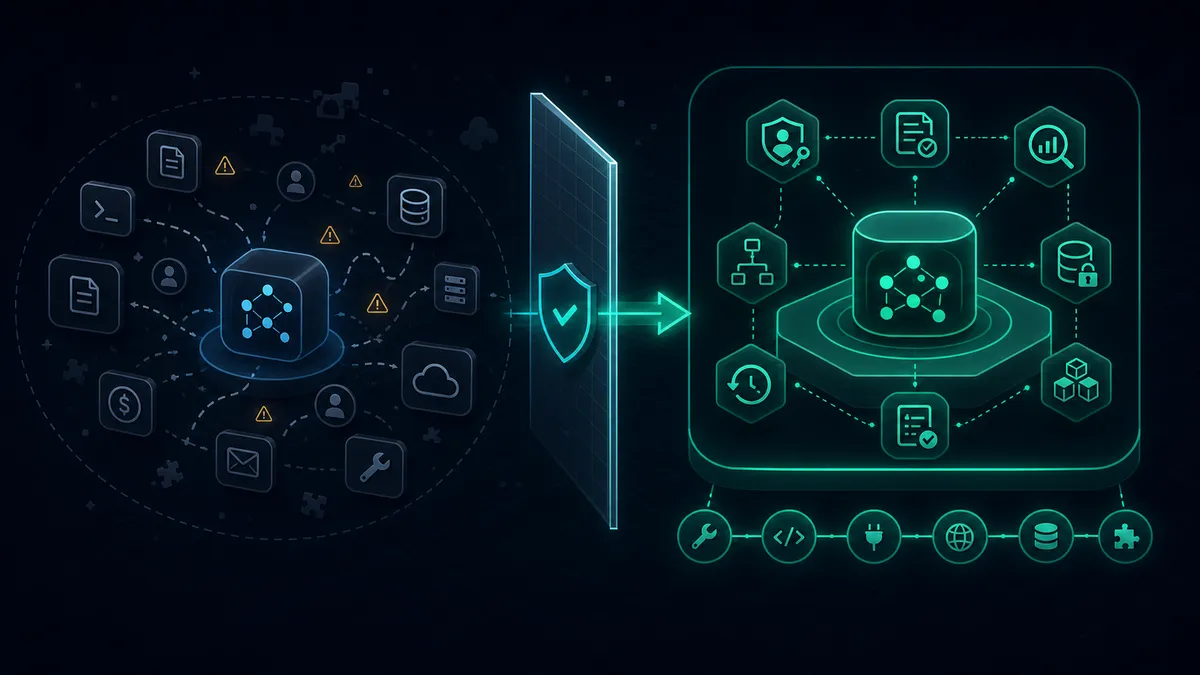
An agent prototype has outgrown ad hoc governance when it starts touching internal tools, affecting customer or financial data, running long tasks, serving multiple teams, or requiring security approval. Other signals include duplicated custom permission logic, unclear ownership, missing audit logs, manual recovery after failures, and expanding MCP tool access. At that point, informal scripts and shared tokens create operational risk. Teams should move toward a platform approach with workload identity, policy, durable execution, observability, and deployment controls. Diagrid Catalyst is most relevant when agents are leaving experimentation and becoming production infrastructure.
Was this article helpful?
Your feedback helps improve Diagrid's FAQ experience.
Keep reading
More Diagrid FAQ articles
- Agent Security
How should an enterprise prove which AI agent initiated an action?
An enterprise should prove which AI agent initiated an action by assigning the agent a verifiable workload identity and recording the execution path.
- Agent Security
Why is workload identity different from a user account for an agent?
Workload identity identifies software, services, agents, or tools, while a user account identifies a person.
- Agent Security
Where is cryptographic identity useful in agent-to-tool calls?
Cryptographic identity is useful when an agent must prove its identity to a tool or service before access is granted.
