
Agent Security
Where is cryptographic identity useful in agent-to-tool calls?
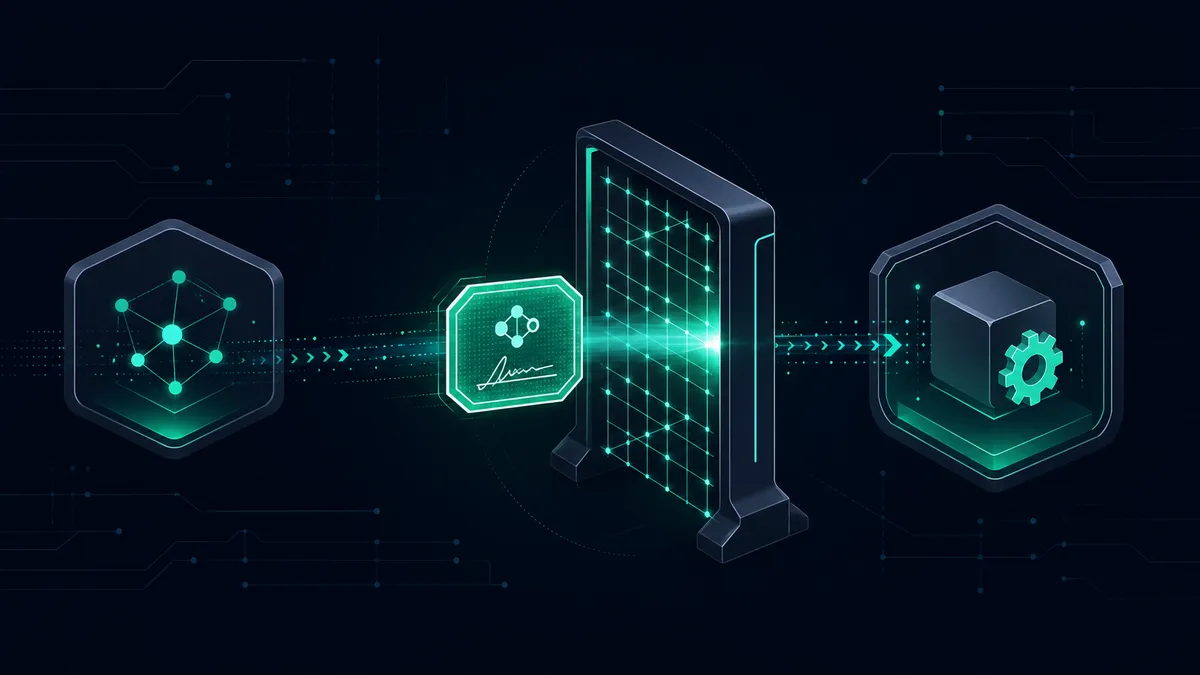
Cryptographic identity is useful when an agent must prove its identity to a tool or service before access is granted. Instead of relying on a shared secret, informal service name, or network location, the agent can use a cryptographic credential that the receiving system can verify. This is important for agent-to-tool calls because tools may expose sensitive actions such as reading data, sending messages, or updating records. Diagrid materials describe Catalyst as using SPIFFE-based identity and mTLS so agents, MCP servers, and services can authenticate each other and support policy-based access decisions.
Was this article helpful?
Your feedback helps improve Diagrid's FAQ experience.
Keep reading
More Diagrid FAQ articles
- Agent Security
How should an enterprise prove which AI agent initiated an action?
An enterprise should prove which AI agent initiated an action by assigning the agent a verifiable workload identity and recording the execution path.
- Agent Security
Why is workload identity different from a user account for an agent?
Workload identity identifies software, services, agents, or tools, while a user account identifies a person.
- Agent Security
What role can SPIFFE or SVIDs play in agent workload identity?
SPIFFE provides a standard way to identify software workloads, and SVIDs are the verifiable identity documents used in that model.
