
Diagrid vs Temporal
Temporal centralizes execution. Diagrid keeps data local, scales with your architecture, supports agents natively, reduces operational complexity, and offers transparent pricing that won't punish success.
We'll cut your Temporal bill by up to 80%.
Better Pricing
Temporal charges per transaction and keeps its control plane in the cloud. Diagrid Catalyst charges a flat license and runs anywhere, including air-gapped, with every step cryptographically signed.
This 60-second comparison walks through the four differences — cost, deployment, verifiability, and scale — side by side.
Diagrid Catalyst (built on Dapr) offers transparent self-hosted pricing by cluster, not an unpredictable Pay-As-You-Go model based on actions, capacity, and storage. Support is included. Non-prod clusters are free!
| Diagrid Catalyst (Premium) | Temporal Cloud (Enterprise) | |
|---|---|---|
| Pricing Model | License | Pay-As-You-Go |
| Non-Production Pricing | Included / Unlimited | Pay-As-You-Go |
| Pricing Metric | Cluster and/or Core | Action, Capacity, Storage |
| Support | Included / Free | 5-10% of usage |
| OSS Support | Included (Dapr) | Not Included |
Data Sovereignty & Compliance
Keep all your sensitive data in your own VPC, not on Temporal's systems. Go one step further with a fully air-gapped deployment if you are in a regulated industry or run government workloads where outbound connectivity isn't an option.
Diagrid Catalyst — Self-hosted
All data stays within your corporate boundary, private and secure.
Temporal Cloud — Hosted
Workflow state and execution history leave your network and are stored in Temporal's infrastructure.
Enterprise Security
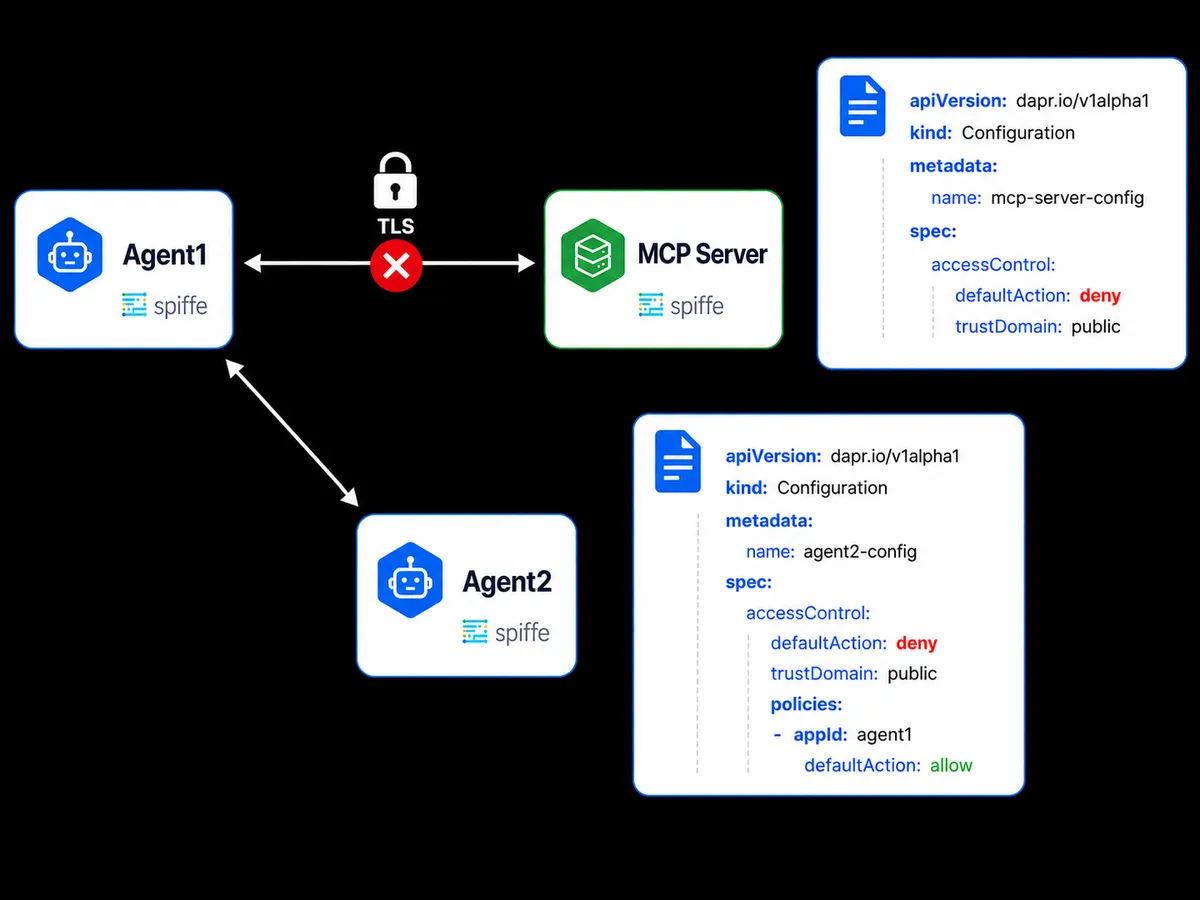
Diagrid Catalyst (built on Dapr) uniquely offers enterprise grade security every CISO needs as part of their AI security framework. Each AI agent is given a unique SPIFFE cryptographic identity with built-in mTLS and zero-trust policies offering identity, authorization and auditability in one elegant, lightweight solution.
Lightweight Architecture
Diagrid Catalyst (built on Dapr) runs as a lightweight sidecar alongside your application pods – no overhead, no heavyweight infrastructure, and less latency.
Dapr — Sidecar Architecture
Lightweight sidecars co-located with your app. Low latency, minimal infrastructure.
Temporal — External Server Architecture
Separate server pods with multiple services. Higher latency, more infrastructure to manage.
Multi-Agent Framework Support
Diagrid (built on Dapr) integrates natively with the agent framework of your choice: LangGraph, CrewAI, Microsoft Agent Framework, Google ADK, OpenAI Agents, and more. No code rewrites required. Temporal only supports OpenAI and PydanticAI.
Learn MoreMulti-Database Support
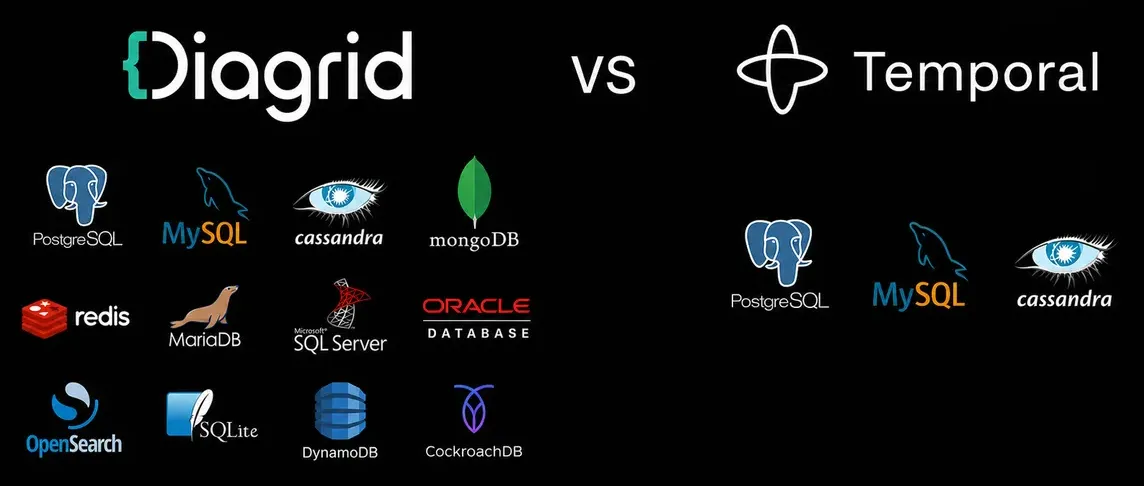
Diagrid Catalyst (built on Dapr) works with PostgreSQL, Redis, MongoDB, DynamoDB, CosmosDB, Cassandra, CockroachDB, and more. Temporal support is limited to PostgreSQL, MySQL, and Cassandra for persistence.
Diagrid/Dapr vs Temporal: Feature by Feature
A quick reference comparing durable execution capabilities across open-source and managed offerings.
| Feature | Dapr OSS | Temporal OSS | Diagrid Catalyst | Temporal Cloud |
|---|---|---|---|---|
| Core | ||||
| Durable Workflows | ||||
| Pub/Sub Messaging | ||||
| State Management | ||||
| Service Invocation | ||||
| Actor Model | ||||
| Ecosystem | ||||
| AI Agent Frameworks | 8+ | 2 | 8+ | 2 |
| Supported Databases | 15+ | 3 | 15+ | Managed |
| Pub/Sub Brokers | 14+ | 14+ | ||
| Ops | ||||
| Lightweight Infra (Sidecar) | ||||
| Built-in mTLS | partial | |||
| Kubernetes Operator | ||||
| Multi-Region Failover | Manual | Manual | (SaaS only) | |
| Governance | ||||
| CNCF Project | Based on Dapr | |||
| Multi-Vendor Backing | Based on Dapr | |||
| Security & Privacy | ||||
| Self-Hosted Data | ||||
| Data Privacy (On-Prem) | ||||
| RBAC | ||||
| SSO | ||||
| Audit Logs | ||||
| Cross-Cluster Service Discovery | ||||
Frequently asked questions
Ready to see the difference?
Start building with Catalyst in minutes. Keep your AI framework, your data, and your infrastructure — just add durable execution.
