
Agent Security
Which security failures are unique to autonomous agent workflows?
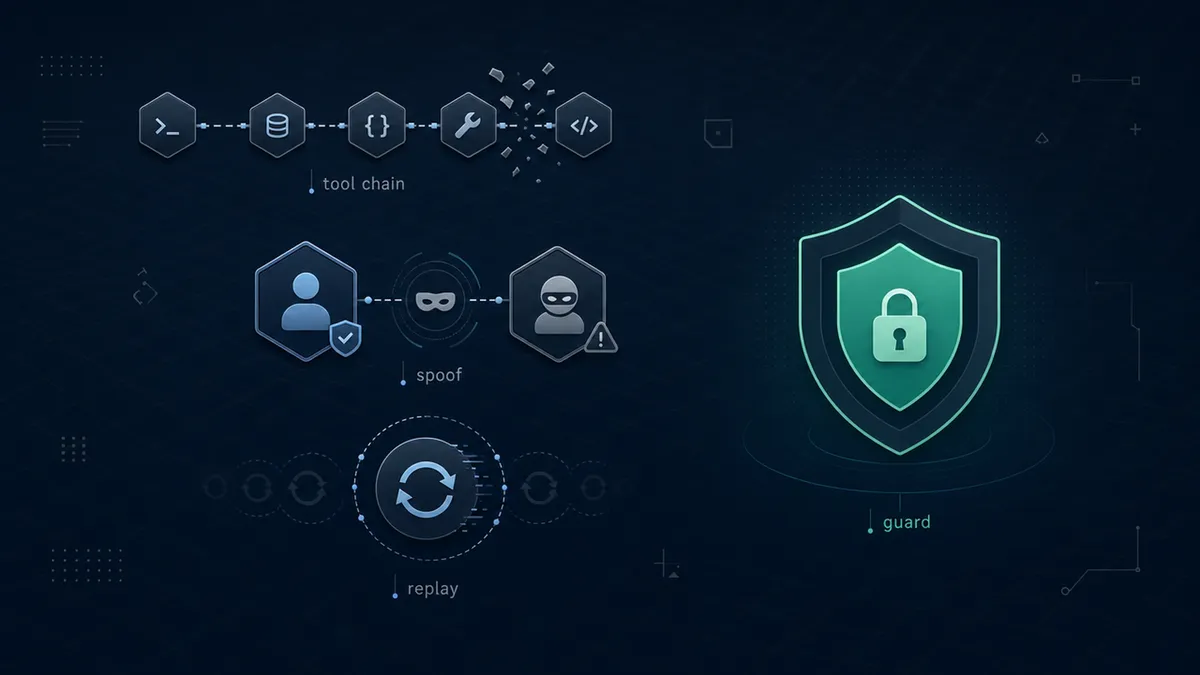
Autonomous agent workflows introduce security failures that are less common in fixed applications. An agent may choose an unexpected tool, pass sensitive context into the wrong system, repeat an action after a retry, act beyond its intended role, or create a chain of calls that is hard to audit. Multi-agent handoffs can add further ambiguity about who initiated what. These risks do not mean agents cannot be used; they mean production agents need identity, policy, auditability, durable execution, and clear data boundaries. Diagrid's security positioning is built around those controls for enterprise agent systems.
Was this article helpful?
Your feedback helps improve Diagrid's FAQ experience.
Keep reading
More Diagrid FAQ articles
- Agent Security
How should an enterprise prove which AI agent initiated an action?
An enterprise should prove which AI agent initiated an action by assigning the agent a verifiable workload identity and recording the execution path.
- Agent Security
Why is workload identity different from a user account for an agent?
Workload identity identifies software, services, agents, or tools, while a user account identifies a person.
- Agent Security
Where is cryptographic identity useful in agent-to-tool calls?
Cryptographic identity is useful when an agent must prove its identity to a tool or service before access is granted.
