AI Agent Frameworks in 2026: The 17 Best Compared
A practical comparison of 17 AI agent frameworks: programming model, languages, multi-agent support, and what each one keeps when a run crashes.

Mark Fussell
CEO & Co-Founder
A practical comparison of the agent frameworks Diagrid supports
AI agent frameworks now cover very different jobs. Some are built around explicit graphs, some make multi-agent collaboration easy, and others focus on type safety, cloud ecosystems, Java, or long-running autonomous work. This comparison covers seventeen of them across Python, TypeScript, Java, .NET and Go, and adds a column most comparisons leave out: what each framework actually keeps when a run crashes.
The right choice depends less on which framework has the longest feature list and more on how your team wants to build, debug, deploy, and maintain agents.
This guide is in two sections. The first table compares each framework on its own terms – programming model, who it suits, what it costs you – independent of where you run it. The second table answers a narrower question: which of those frameworks Diagrid makes durable today, in which language, and under which package.
There is no universal winner. A Python team building a strict workflow may make a different choice than a Java team adding agents to an existing Spring application, a Go team that needs durable checkpoints, or a team building a coding agent that needs a filesystem and shell.
TL;DR: which framework should you choose?
 LangGraphPythonJS/TS
 LangChainPythonJS/TS
 CrewAIPython
 PydanticAIPython
 Google ADKPythonTypeScriptJavaGoKotlin
 AWS StrandsPythonTypeScript (preview)
 OpenAI Agents SDKPythonTypeScriptDeep AgentsPythonTypeScript
 smolagentsPython
 Microsoft Agent Framework.NETPythonGo (preview)
 Spring AIJava
 Claude Agent SDKPythonTypeScript
 Dapr AgentsPython
 EinoGoLangChainGoGo
 MastraTypeScript
What is an AI agent framework?
An AI agent framework is a library that gives a model a loop: it defines instructions and tools, decides what runs next, carries state and memory between steps, and returns a result. Without one you are writing that loop yourself against a raw model API.
Agentic AI frameworks differ from earlier LLM libraries in what they let the model decide. A chain runs a sequence you wrote. An agent chooses its own next step, which is why these frameworks care so much about tools, state, and control over how far the model can go on its own.
What separates them is the programming model. Graph-based frameworks make control flow explicit. Role-based frameworks organise work around specialist agents. Thin SDKs keep abstractions low and leave more to your application code. Agent harnesses add planning, files and subagents for work that runs for hours. None of these is better in general; they suit different problems and different teams.
What makes a good AI agent framework?
A useful agent framework should make the agent loop easy to understand. Developers need clear ways to define instructions, tools, state, memory, and the rules that determine what happens next.
The programming model matters as much as the feature list. Graph-based systems give developers more control. Role-based systems can make multi-agent designs easier to understand. Thin SDKs keep abstractions low. Full frameworks provide more features but ask teams to adopt more conventions.
Model choice also matters. Some frameworks are deeply tied to one vendor ecosystem. Others are model-agnostic and make it easier to switch between OpenAI, Anthropic, Google, Bedrock, or open models.
The surrounding developer experience can be a deciding factor. Type safety, local debugging, tracing, evaluations, human approval, MCP support, and built-in developer UIs can save more time than another orchestration primitive.
Finally, language and existing stack should carry real weight. A Java team already using Spring Boot should not pick a Python-first framework simply because it is popular. The best framework is usually the one that fits both the agent design and the team that has to maintain it.
How we compare the frameworks
- Programming model: graph, loop, roles, workflows, or agent harness
- Languages and developer fit
- Tools, MCP, memory, and structured output
- Multi-agent support
- Human-in-the-loop and workflow control
- Tracing, evaluation, and debugging
- Model and cloud portability
- Strengths and tradeoffs
- Best-fit use cases
LangGraph
Best for: complex, stateful agents where developers want explicit control
PythonJS/TSLangGraph is a low-level orchestration framework for stateful agents and workflows. Its core model is a graph made from state, nodes, and edges. Nodes perform work. Edges decide what runs next. That makes the control flow visible instead of hiding it inside one large agent loop.
That graph model is the biggest reason teams choose LangGraph. It works well when an agent needs loops, branches, approvals, retries, parallel work, or different paths based on state. Developers can model the flow directly rather than hoping the model chooses the right sequence every time.
LangGraph also has a persistence model. Checkpoints save graph state between steps, which supports memory, human-in-the-loop pauses, replay, time-travel debugging, and resuming work. This is useful for agents that need to pause for approval or keep context across a long process.
The main strength is control. LangGraph exposes enough of the execution model that developers can reason about what the agent is doing. It also sits inside the broader LangChain ecosystem, so teams can use LangChain for model and tool integrations and LangSmith for tracing and evaluation.
The tradeoff is that low-level control creates more design work. Teams have to think about state shape, graph structure, node boundaries, and routing. For a simple tool-calling assistant, LangGraph can feel heavier than a thin agent SDK.
Choose LangGraph when the workflow itself matters. It is a strong fit for business processes, complex multi-step agents, human approval flows, and systems where developers need to see and control exactly how state moves through the application.
→ Run LangGraph durably in 10 minutes · LangGraph in production · the 12-point production checklist · LangGraph docs
LangChain
Best for: provider-agnostic chains, retrieval, and broad integration coverage
PythonJS/TSLangChain is the integration layer beneath LangGraph: model providers, tools, retrievers, output parsers, and document loaders, composed into chains. Most teams reach for it when the work is provider coverage and retrieval rather than control flow.
Its breadth is the point. If a model, vector store, or document source is worth using, there is usually a LangChain integration for it already, which makes it a fast way to assemble a retrieval pipeline without writing adapters by hand.
The tradeoff is that its abstractions can obscure what actually reaches the model. When an application needs explicit branching, durable state, or a control flow a reader can follow, LangGraph is the better fit, and the two are designed to be used together.
Choose LangChain when integration breadth and retrieval matter more than orchestration, or when it is the substrate underneath a LangGraph application.
CrewAI
Best for: role-based multi-agent systems and fast collaboration prototypes
PythonCrewAI is built around the idea that a group of specialized agents can work like a team. Each agent gets a role, goal, tools, and responsibilities. Tasks can then be assigned to agents and coordinated as a crew.
This mental model is easy to explain. A research agent gathers information, an analyst reviews it, and a writer produces the final output. For many business teams, that feels more natural than designing a state graph from scratch.
CrewAI now has two main concepts. Crews focus on autonomous collaboration between agents. Flows provide more structured, event-driven control for cases where the application needs clearer steps, branching, state, and deterministic logic. The two approaches can be used together.
The strength of CrewAI is speed. It is easy to get a multi-agent prototype running, and its role-based design maps well to research, content, support, planning, and back-office automation. It also has a broad tool ecosystem and supports custom tools and outside services.
The tradeoff is that autonomous crews can become harder to reason about as the number of agents and tasks grows. A role-based design can look simple on paper while producing a large amount of model-to-model communication. Teams should watch token use and avoid creating extra agents when a normal function or workflow step would be enough.
Choose CrewAI when the problem really does look like a team of specialists. If the application is better described as a strict business process, use Flows heavily or consider a framework with more explicit workflow control.
→ Run CrewAI durably in 10 minutes · CrewAI in production · CrewAI docs
PydanticAI
Best for: Python teams that care about type safety and structured data
PythonPydanticAI brings the Pydantic style of Python development to agents. An agent can define instructions, function tools, dependencies, model settings, and a typed output. The result feels close to normal Python application code rather than a separate workflow language.
Its strongest feature is structured output. Developers can define a Pydantic model, dataclass, TypedDict, or other typed schema as the expected result. PydanticAI builds the schema, asks the model for structured data, validates the response, and returns a real typed object to the application.
Tools follow the same pattern. Function signatures and docstrings can be turned into tool schemas, while dependencies can be passed through a typed run context. That makes PydanticAI a natural fit for teams already using Pydantic and FastAPI.
The framework is model-agnostic and supports multiple providers. It also integrates with Pydantic Logfire for tracing and has support for MCP, streaming, agent-to-UI protocols, and several outside durable execution systems.
The main tradeoff is ecosystem size. PydanticAI is newer than LangChain and does not have the same volume of third-party examples and integrations. Its appeal is less about having every feature built in and more about having clean Python abstractions and strong validation.
Choose PydanticAI when agents are part of a typed Python application and structured data matters. It is especially strong for backend services where agent output needs to feed directly into normal application logic.
→ Run PydanticAI durably in 10 minutes · PydanticAI in production · PydanticAI docs
Google ADK
Best for: teams building around Gemini and Google Cloud
PythonTypeScriptJavaGoKotlinGoogle's Agent Development Kit is a framework for building and managing agents inside the Google AI ecosystem. It includes agent definitions, tools, sessions, multi-agent patterns, local development, evaluation, and deployment paths into Google infrastructure.
ADK ships five official SDKs: Python, TypeScript, Java, Go, and Kotlin. Python remains the most mature, and Kotlin reached 1.0 in September 2026 for Android and multiplatform parity. That makes it considerably broader than the Python-only agent frameworks and useful for larger organizations with mixed development stacks.
The framework is opinionated about agent composition. Teams can build single agents, workflow agents, and multi-agent systems, then connect them to tools, search, MCP servers, and Google services. It also has local developer tooling for running and debugging agents before deployment.
ADK's biggest strength is integration with Google's model and cloud stack. Gemini, Vertex AI, Google Search, and Google Cloud deployment all fit naturally. Teams already using those services can get a more unified development path than they would with a provider-neutral framework.
The tradeoff is the same one that comes with many vendor ecosystems. ADK can work beyond a narrow Google-only setup, but its clearest value appears when a team is already committed to Google models or infrastructure. Teams seeking maximum cloud neutrality may prefer a lighter framework.
Choose Google ADK when Google is already a major part of your AI stack, or when you want an agent framework with strong built-in development, evaluation, and deployment tooling around that ecosystem.
→ Run Google ADK durably in 10 minutes · Google ADK in production · ADK docs
AWS Strands
Best for: lightweight, model-driven agents with strong tool use
PythonTypeScript (preview)Strands Agents is an open-source SDK created by AWS for building agents around a simple model-driven loop. The model receives context, decides whether it needs a tool, gets the result, and keeps going until it has enough information to answer.
The framework tries to keep that loop simple while still giving developers the controls needed for real applications. Agents support tools, MCP clients, context management, hooks, retries, invocation limits, cancellation, and multiple model providers.
Strands is less prescriptive than a graph framework. The model does more of the decision making, while the SDK manages the loop and tool execution. This can reduce application code for agents that do not need a fixed sequence of steps.
Another strength is model flexibility. Strands works naturally with Amazon Bedrock, but it is not limited to one model provider. AWS publishes deployment examples for Lambda, Fargate, EKS, Kubernetes, and Bedrock AgentCore. The SDK is available for Python and TypeScript.
The tradeoff is that a model-driven loop gives developers less explicit workflow structure. When a process has strict branching rules, approvals, or many deterministic steps, teams may need to add more orchestration around the basic agent loop.
Choose Strands when you want a clean tool-using agent SDK, especially if you are already on AWS, but do not need every workflow decision expressed as a graph.
→ Run Strands durably in 10 minutes · AWS Strands in production · Strands docs
OpenAI Agents SDK
Best for: simple agent primitives, handoffs, guardrails, and OpenAI-centered applications
PythonTypeScriptThe OpenAI Agents SDK is intentionally small. Its main primitives are agents, tools, handoffs, guardrails, sessions, and tracing. The SDK manages the agent loop while letting normal Python or TypeScript code handle the surrounding application logic.
That small API is one of its biggest strengths. A developer can define an agent with instructions and tools, run it, and add handoffs when a specialist agent should take over. It avoids forcing developers into a separate graph or workflow language.
Handoffs are especially useful for multi-agent systems. An intake agent can route a request to a billing, support, or research agent without requiring a large orchestration layer. Agents can also be exposed as tools when delegation should stay under the control of another agent.
The SDK includes built-in tracing, guardrails, MCP support, persistent sessions, human-in-the-loop patterns, voice and realtime agents, and sandbox agents. It works best with OpenAI models and hosted tools, though adapters and custom model providers can extend it beyond OpenAI.
The tradeoff is scope. The SDK gives developers core agent primitives, not a full application platform. Teams that want advanced workflow modeling, a large integration catalog, or a broader built-in evaluation environment may need additional tools.
Choose the OpenAI Agents SDK when you want a low-friction way to build agents and your application already uses OpenAI heavily. It is a particularly good fit for assistants, routing systems, tool-using agents, and multi-agent handoff patterns.
→ Run OpenAI Agents durably in 10 minutes · OpenAI Agents SDK in production · Agents SDK docs
Deep Agents
Best for: long-horizon research, coding, and planning agents
PythonTypeScriptDeep Agents is an agent harness built on LangChain and LangGraph for tasks that take many steps and produce a lot of intermediate context. It adds planning tools, a virtual filesystem, context management, long-term memory options, and subagents that run in their own context, which is what lets it keep working through research and coding sessions that would otherwise fill the conversation.
Deep Agents ships in both Python and TypeScript. The TypeScript port lives in its own repository, langchain-ai/deepagentsjs, and publishes to npm as deepagents.
The tradeoff is that this is a more opinionated harness. If all you need is a small agent with two tools, Deep Agents adds concepts you may not need. It is also closely tied to the LangChain and LangGraph ecosystem.
Choose Deep Agents when the agent itself is expected to do substantial work over time. Research agents, coding agents, planning systems, and agents that delegate complex subtasks are the clearest fit.
→ Run Deep Agents durably in 10 minutes · LangChain Deep Agents in production · Deep Agents docs
smolagents
Best for: compact agents that act by writing and running code
PythonHugging Face's smolagents takes a different line on what an action is. Instead of emitting a JSON tool call, the model writes a Python snippet and an interpreter runs it, feeding the output back as the next observation.
That buys composability a structured tool call cannot express: loops, conditionals, and nested calls inside a single step, with the result of one call becoming a variable for the next. The library stays deliberately small, at under a thousand lines in its main agent module.
The tradeoff is that executing model-written code demands a sandbox, and the minimal feature set means more of the surrounding application is yours to build.
Choose smolagents when the task is genuinely computational and you want the model to express its action as code rather than as a sequence of discrete tool calls.
Microsoft Agent Framework
Best for: .NET, Python, and Microsoft enterprise environments
.NETPythonGo (preview)Microsoft Agent Framework is Microsoft's current agent platform for building agents and workflows. It brings together ideas from Microsoft's earlier AutoGen and Semantic Kernel work into a more unified set of agent and workflow APIs.
An agent combines a model or remote agent connection with instructions, tools, middleware, context providers, and session state. Workflows add explicit graphs that connect executors through edges and conditions. This lets teams mix model-driven agents with more deterministic workflow steps.
The framework is a strong fit for enterprise systems because it supports .NET and Python, both of which reached 1.0. A Go SDK also exists, developed outside the core repository at microsoft/agent-framework-go and still in public preview: declarative agents, RAG, CodeAct, and functional workflows have not landed there yet. It also fits naturally with Azure AI services and Microsoft tooling, while still exposing general agent abstractions.
Workflow support is a major strength. Developers can create graph-based flows, fan-out and fan-in patterns, event-driven steps, and human input. The framework also has middleware and safety hooks for teams that need application-level controls around agent behavior.
The tradeoff is breadth. Microsoft has a large AI platform, and understanding which pieces belong in the agent framework, Azure AI Foundry, model providers, and surrounding services can take time. Teams not using Microsoft infrastructure may find a smaller framework easier to adopt.
Choose Microsoft Agent Framework when your developers are already comfortable with .NET, Azure, or Microsoft's AI stack and want agents to fit into that environment rather than creating a separate Python-only platform.
→ Run Microsoft Agent Framework durably in 10 minutes · Microsoft Agent Framework in production · Agent Framework docs
Spring AI
Best for: Java and Spring teams adding AI to existing applications
JavaSpring AI is not only an agent framework. It is a broader AI application framework designed to bring models, tools, memory, RAG, MCP, observability, and other AI patterns into the Spring programming model.
That distinction matters. Java teams can add AI features without abandoning Spring Boot conventions or moving agent logic into a separate Python service. The APIs are designed to look familiar to Spring developers, including a fluent ChatClient and Spring Boot auto-configuration.
Spring AI 2.0 makes the tool-calling loop a first-class part of ChatClient through the ToolCallingAdvisor. The model can request tools, the application executes them, results go back into the conversation, and the loop continues until the model returns a final answer.
Spring AI also includes chat memory, RAG advisors, vector store integrations, MCP support, model portability, observability, and evaluation helpers. Its Advisors API gives developers a reusable way to add memory, retrieval, policies, and other behavior around model calls.
The tradeoff is that Spring AI is broader than a dedicated multi-agent framework. Teams looking for a ready-made role-based crew or a highly visual graph model may need to build more of that orchestration themselves.
Choose Spring AI when the main question is not "which Python agent framework should we adopt?" but "how do we add agents and AI features to the Java applications we already run?"
→ Run Spring AI durably in 10 minutes · Spring AI in production · Spring AI docs
Claude Agent SDK
Best for: coding agents and autonomous agents built around Claude
PythonTypeScriptThe Claude Agent SDK packages the same agent loop and tool model that powers Claude Code into Python and TypeScript libraries. Instead of starting with a blank tool loop, developers get built-in capabilities for reading files, editing code, running commands, searching the web, and managing context.
This makes the SDK unusually strong for coding and computer-style tasks. Tools such as Read, Write, Edit, Bash, Glob, Grep, WebSearch, and WebFetch are available without developers having to build each one from scratch.
The SDK also supports hooks, MCP, permissions, sessions, and subagents. Subagents run in separate contexts, which lets a parent agent delegate focused work without filling the main conversation with every intermediate step.
Sessions are persisted so applications can resume or fork previous work. The SDK can also checkpoint file changes separately from conversation state, which is useful for coding agents that need to revisit or undo edits.
The tradeoff is model orientation. The SDK is built specifically around Claude and the Claude Code harness. That is a benefit when Claude is the chosen model, but teams looking for model-provider neutrality may prefer a framework with a generic model abstraction.
Choose the Claude Agent SDK when you want Claude to act inside a rich working environment, especially for software engineering, research, operations, or other tasks where the agent needs to use files, commands, and subagents.
→ Run Claude Agents durably in 10 minutes · Claude Agent SDK docs
Dapr Agents
Best for: distributed, durable, and multi-agent systems built on Dapr
PythonDapr Agents is an open-source Python framework for building LLM-powered autonomous agentic applications using Dapr's distributed systems capabilities. It provides tools for creating AI agents that can execute durable tasks, make decisions, and collaborate through workflows, while leveraging Dapr's state management, messaging, security, and observability features for reliable execution at scale. You can write a durable Dapr Agent in as little as 10 lines of code and get the durability guarantees that agents need in production.
The framework supports agent reasoning, tool calling, memory, MCP, workflows, and multi-agent orchestration. Dapr Agents v1.0 is generally available, giving teams a stable framework rather than an experimental agent package.
A major difference is that distributed systems concerns are part of the foundation. Agents can use Dapr workflows, state stores, pub/sub, service invocation, and workload identity instead of stitching those capabilities together from unrelated libraries.
This makes Dapr Agents especially useful for systems where agents need to communicate with services or other agents across processes and environments. It also supports common agent patterns such as ReAct-style loops, event-driven workflows, and calling agents as tools.
Because it builds on Dapr, a graduated CNCF project, Dapr Agents runs naturally on Kubernetes and other cloud-native platforms.
The tradeoff is that Dapr Agents' value comes from adopting Dapr. Its opinionated, workflow-based design builds in durability, which adds concepts a simple, short-lived agent may not need.
Choose Dapr Agents when you need durability guarantees, when you are running on Kubernetes, or when you want agent development and application infrastructure to share the same underlying runtime.
→ Run Dapr Agents durably in 10 minutes · Dapr Agents docs
Eino
Best for: high-throughput agent services written in Go
GoEino is ByteDance's Go framework, built by the CloudWeGo team and run in production at high request volume. It is component-based – ChatModel, Tool, Retriever, ChatTemplate – with those components wired into graphs.
Crucially, it is a redesign for Go idioms rather than a port of a Python library, which shows in its type handling and its concurrency model. Its agent development layer adds ReAct patterns, multi-agent coordination, and human-in-the-loop interrupt and resume flows.
The tradeoff is ecosystem size. The Go agent ecosystem is newer than the Python one, so there are fewer third-party integrations and examples to draw on.
Choose Eino when the agent is part of a Go service that has to hold up under real throughput, and you would rather not stand up a Python application to run it.
LangChainGo
Best for: Go teams that want familiar LangChain idioms
GoLangChainGo is the Go port of LangChain, covering ten or more model providers including OpenAI, Anthropic, and Bedrock. For teams that already know LangChain, it offers a recognizable vocabulary without leaving Go.
The tradeoff is that it trails the Python original in both coverage and pace, and its maintenance activity is worth checking before you commit to it for something long-lived.
Choose LangChainGo when the LangChain model of chains and providers is the right shape for the problem and Go is a hard requirement.
Mastra
Best for: TypeScript and Node teams building agents end to end
TypeScriptMastra is a TypeScript-native framework for agents, tools, and workflows, aimed at teams who want to build agents in the same language as the rest of their application rather than standing up a Python service beside it.
The tradeoff is ecosystem maturity: the TypeScript agent ecosystem is newer than the Python one, and fewer frameworks have been through the same production mileage.
Choose Mastra when TypeScript is the primary language and you want agents inside your existing Node application.
→ Run Mastra durably in 10 minutes · Mastra docs
HolmesGPT
Best for: Kubernetes and SRE incident investigation
PythonHolmesGPT is a domain-specific investigation agent for SRE and Kubernetes work rather than a general-purpose framework. It ships toolsets for inspecting clusters and correlating signals, and its job is diagnosis rather than open-ended task execution.
Run durably, each LLM iteration and each tool call becomes a workflow activity, and approval pauses become durable external events that can wait days without holding a process open. Investigations resume from the last completed activity after a restart.
The tradeoff is scope, plus strict dependency pins that mean it is best installed into a dedicated environment rather than alongside other agent libraries.
Choose HolmesGPT when the problem is incident diagnosis and root-cause analysis, not general agent development.
→ Run HolmesGPT durably in 10 minutes · HolmesGPT repo
Framework-by-framework comparison
This table covers the general-purpose agent frameworks. The Go frameworks, Mastra, and the domain-specific entries are described in their own sections above.
LangGraphLangChainCrewAIPydanticAIGoogle ADKAWS StrandsOpenAI Agents SDKDeep AgentssmolagentsMicrosoft Agent FrameworkSpring AIClaude Agent SDKDapr AgentsEinoLangChainGoMastraHead-to-head comparisons
Most people arrive at this decision with two frameworks in mind, not seventeen. These are the comparisons that come up most often.
LangChain vs LangGraph
They are not competitors; they are layers. LangChain is the integration layer – model providers, tools, retrievers, output parsers, document loaders – composed into chains. LangGraph is the orchestration layer above it, where control flow becomes an explicit graph of state, nodes and edges.
Choose LangChain when the work is provider coverage and retrieval: you want a vector store, a document loader and six model providers without writing adapters. Choose LangGraph when the work is control flow: loops, branches, approvals, retries, parallel paths, and a run someone can reason about. Most production systems use both, with LangChain underneath a LangGraph application.
The practical tell: if you find yourself describing your application as "first this, then that, unless…", you want LangGraph. If you are describing it as "fetch these documents and answer from them", LangChain is enough.
LangGraph vs CrewAI
The difference is who decides the sequence. LangGraph makes you draw it: state, nodes, edges, and explicit routing. CrewAI lets you describe a team – roles, goals, tools – and lets the agents coordinate, with Flows available when you need more deterministic structure.
LangGraph suits business processes, approval flows and anything where an auditor or a colleague needs to follow the path. CrewAI suits research, content and back-office work that genuinely looks like a team of specialists, and it gets to a working prototype faster.
The tradeoff shows up at scale. A role-based design can look simple on paper and produce a great deal of model-to-model conversation. Watch token use, and if the problem is really a strict process, use Flows heavily or move to a graph.
LangGraph vs AutoGen, and CrewAI vs AutoGen
AutoGen's conversational multi-agent model has largely been folded into Microsoft Agent Framework, which brings AutoGen and Semantic Kernel together behind agents plus explicit graph workflows. For teams choosing today, the comparison is usually LangGraph or CrewAI against Microsoft Agent Framework rather than against AutoGen itself.
If you are already on .NET or Azure, Microsoft Agent Framework is the natural shortlist entry. If you are Python-first and want explicit control, LangGraph. If you want role-based collaboration, CrewAI.
Google ADK vs LangGraph
ADK is a full toolkit – agents, tools, sessions, evaluation, local developer UI and deployment paths into Google infrastructure – across five SDKs: Python, TypeScript, Java, Go and Kotlin. LangGraph is a focused orchestration library for Python and JS/TS.
Choose ADK when Gemini, Vertex AI or Google Cloud is already your stack, or when you need Java, Go or Kotlin. Choose LangGraph when you want fine control over execution and provider neutrality matters more than built-in deployment tooling.
PydanticAI vs LangGraph
PydanticAI treats the agent as part of a normal typed Python application: typed outputs validated against a Pydantic model, tools generated from function signatures, dependencies injected through a typed run context. LangGraph treats the agent as a graph you design.
Choose PydanticAI when the agent's output feeds directly into backend code and structured data is the point. Choose LangGraph when the path through the work matters more than the shape of the result. Teams using FastAPI and Pydantic already will find PydanticAI closer to the code they write every day.
LangGraph, LangChain and CrewAI alternatives
If LangGraph feels heavier than your problem needs, look at the OpenAI Agents SDK or AWS Strands for a lightweight loop, or PydanticAI for a typed application. If you need LangChain's breadth in another language, Mastra covers TypeScript and Eino or LangChainGo cover Go. If CrewAI's autonomous crews are hard to predict, LangGraph and Microsoft Agent Framework both give more explicit orchestration, and Deep Agents handles delegation through subagents instead of roles.
Open source AI agent frameworks
Most of the frameworks here are open source, which matters for teams that need to read the execution loop, patch it, or run it without a vendor account. LangGraph, LangChain, CrewAI, PydanticAI, Google ADK, AWS Strands, OpenAI Agents SDK, Deep Agents, smolagents, Microsoft Agent Framework, Spring AI, Dapr Agents, Eino, LangChainGo, Mastra and HolmesGPT are all open source. Dapr Agents sits on Dapr, a graduated CNCF project, which matters if governance and long-term stewardship are part of the decision.
Open source is not the same as free to operate. The durability, security and observability an agent needs in production are yours to build unless something underneath provides them.
Multi-agent frameworks
Multi-agent support means different things across these frameworks, and the difference matters more than the checkbox. CrewAI organises agents as a team with roles and goals. LangGraph and Microsoft Agent Framework give explicit orchestration between agents. OpenAI Agents SDK uses handoffs, where one agent passes control to a specialist. Deep Agents and Claude Agent SDK use subagents that run in their own context so the parent's conversation does not fill with intermediate work. Dapr Agents treats agent-to-agent communication as a distributed systems problem, with messaging and workload identity underneath.
Whichever model you pick, fan-out multiplies cost. Four sub-agents making eight model calls each turn one request into thirty-two calls. Size rate limits on calls per request, not per agent.
Which frameworks does Diagrid make durable?
Most agent frameworks can save something between runs, but they do not all save the same thing:
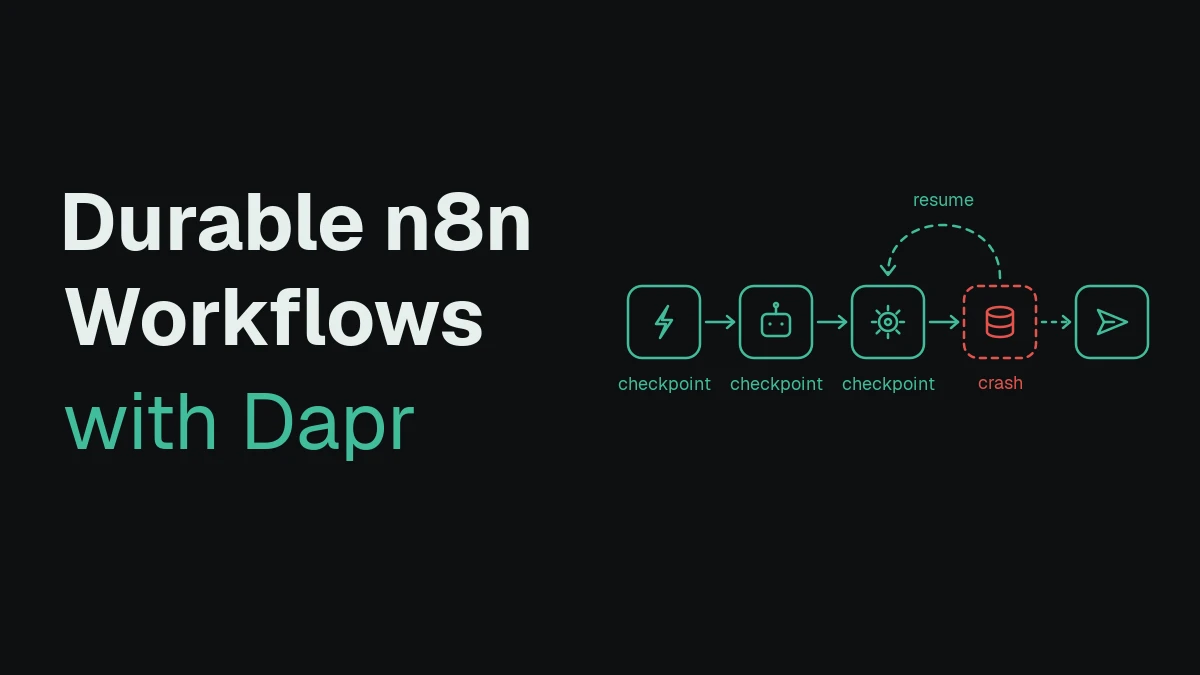
Checkpointing records where a run was. Durable execution makes sure the run finishes. We make that case in full in why checkpoints are not durable execution.
The table below shows what each framework provides on its own and what it gains with Diagrid. Each integration wraps the framework's execution loop in Dapr Workflows, so you keep the same agent logic, tools, and prompts. The only resource required is a workflow state store.
Dapr Agentsdapr/dapr-agentsLangGraphdiagrid[langgraph]LangChaindiagrid[langchain]CrewAIdiagrid[crewai]PydanticAIdiagrid[pydantic_ai]Google ADKdiagrid[adk]AWS Strandsdiagrid[strands]OpenAI Agents SDKdiagrid[openai_agents]Claude Agent SDKdiagrid[claude_agents]Deep Agentsdiagrid[deepagents]smolagentsdiagrid[smolagents]diagrid[holmesgpt]Microsoft Agent FrameworkDiagrid.AI.Microsoft.AgentFrameworkMastra@diagrid/agent-mastraSpring AIio.diagrid:diagrid-spring-ai-starterEinodiagridio/go-ai (adapters/eino)LangChainGodiagridio/go-ai (adapters/langchaingo)Thirteen of these have a runnable quickstart: pick your framework and crash an agent on purpose. It takes about ten minutes and shows the difference better than any table.
How to choose the right AI agent framework
Start with your language. If the team is already Java-first, Spring AI deserves serious consideration. If the team is .NET-heavy, Microsoft Agent Framework is a natural shortlist choice. Go teams should look at Eino for throughput or LangChainGo for ecosystem. TypeScript teams have Mastra, plus the TypeScript SDKs from LangGraph, OpenAI, Claude, ADK, and Deep Agents. Python teams still have the widest set of options.
Next decide how much control the application needs. Pick LangGraph or Microsoft Agent Framework when execution paths need to be explicit. Pick CrewAI when the system is naturally described as a team of specialists. Pick OpenAI Agents SDK or Strands when a lightweight agent loop is enough.
Then consider whether structured data is central to the product. PydanticAI stands out when typed inputs and outputs feed directly into backend code. Spring AI offers a similar comfort level for Java teams. Dapr Agents also supports structured outputs.
For long-horizon autonomous work, look at the agent harnesses rather than only basic orchestration frameworks. Deep Agents and Claude Agent SDK both include stronger built-in patterns for files, subagents, context management, and work that spans many steps.
Finally, weigh ecosystem lock-in against integration quality. Google ADK, Microsoft Agent Framework, OpenAI Agents SDK, Claude Agent SDK, and Strands all become more attractive when your models and cloud stack already match the vendor behind them. Provider-neutral frameworks make more sense when model portability is a top requirement. Dapr Agents makes a strong case here too, because you can back a durable agent with any major cloud provider's infrastructure for state, pub/sub and the other services your agent touches.
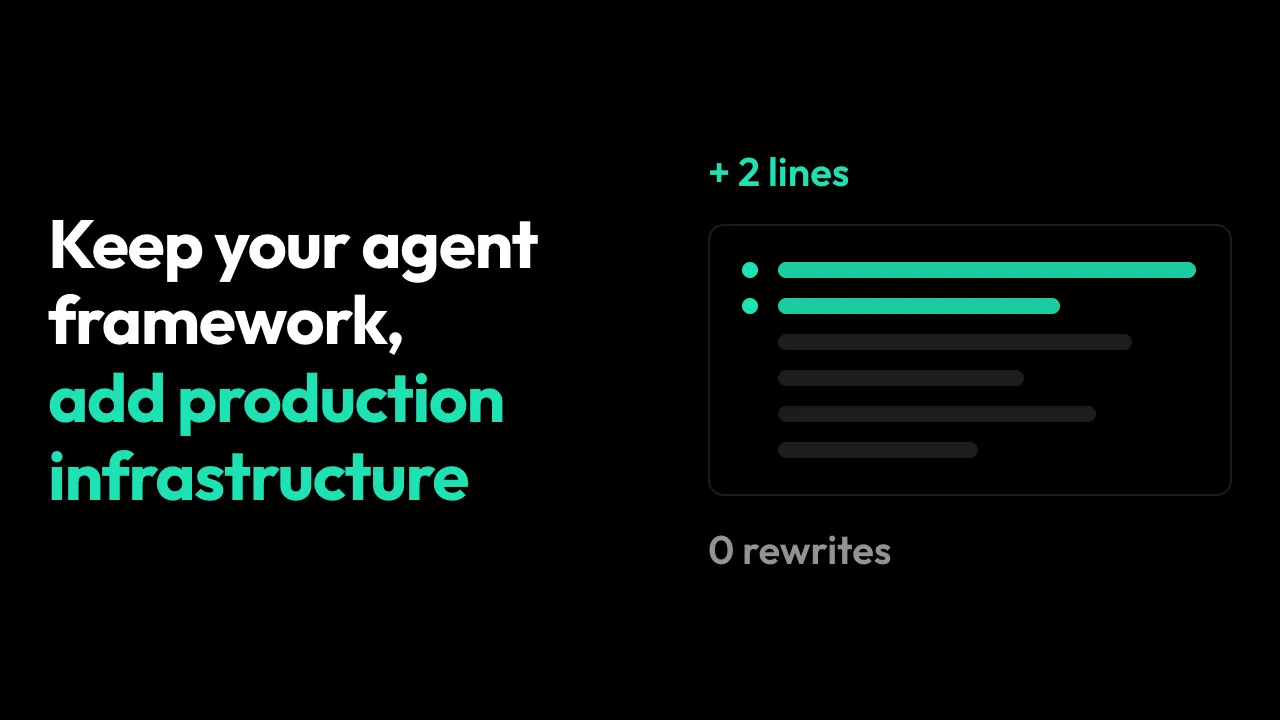
If you need built-in durability, so that production agents resume from their last completed step instead of re-running LLM and tool calls they already paid for, Dapr Agents is the right fit. If you are already using an agent framework and want durability guarantees baked in, keep the framework you have and add the Diagrid package with a few lines of code:
- Python: LangGraph, LangChain, CrewAI, Google ADK, AWS Strands, OpenAI Agents SDK, PydanticAI, Claude Agent SDK, Deep Agents, smolagents, HolmesGPT
- Java: Spring AI
- .NET: Microsoft Agent Framework
- TypeScript: Mastra
- Go: Eino, LangChainGo
For the wider picture of what changes when agents move from a prototype to something on call, see our guide to running agent workflows in production.
Which framework is best for common use cases?
LangGraphCrewAIPydanticAIGoogle ADKAWS StrandsOpenAI Agents SDKDeep AgentsMicrosoft Agent FrameworkSpring AIClaude Agent SDKDapr AgentsEinoMastraFrequently asked questions
Final takeaway
Choose on programming model first, then language, model ecosystem, tools, state, debugging, and multi-agent needs. GitHub stars and feature-list length are poor proxies for any of them. If a framework adds more concepts than the application needs, a smaller SDK is the better choice.
Whichever one you pick, the durability gap is the same, and it is yours to close. Add durable execution to your framework →