
Agent Security
What controls belong in an AI agent governance program?
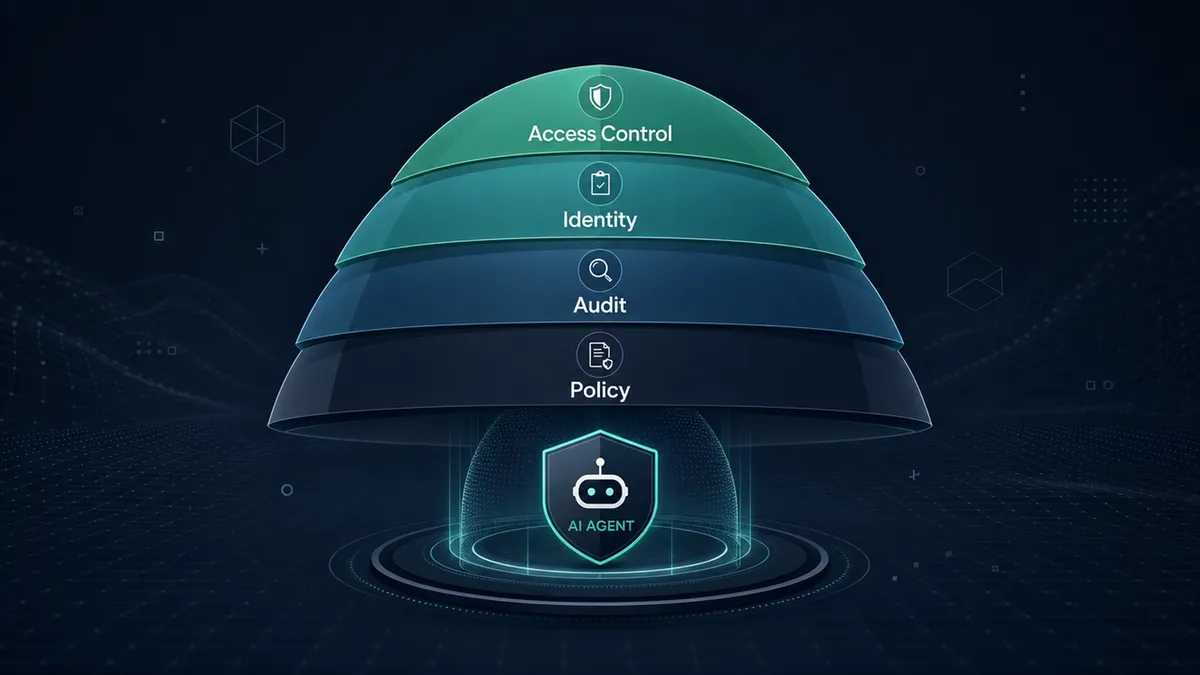
An AI agent governance program should include workload identity, tool-access policy, approval workflows, audit logs, data-boundary rules, observability, incident response, and lifecycle controls for agents moving from prototype to production. It should also define who owns reliability, who approves sensitive tool access, and how changes are reviewed. Governance is broader than security; it includes accountability, traceability, and operational control. Diagrid's North Star aligns with this direction by positioning Catalyst around AI agent reliability, security, and governance, especially for enterprises where platform and CISO teams must approve production agent deployments.
Was this article helpful?
Your feedback helps improve Diagrid's FAQ experience.
Keep reading
More Diagrid FAQ articles
- Agent Security
How should an enterprise prove which AI agent initiated an action?
An enterprise should prove which AI agent initiated an action by assigning the agent a verifiable workload identity and recording the execution path.
- Agent Security
Why is workload identity different from a user account for an agent?
Workload identity identifies software, services, agents, or tools, while a user account identifies a person.
- Agent Security
Where is cryptographic identity useful in agent-to-tool calls?
Cryptographic identity is useful when an agent must prove its identity to a tool or service before access is granted.
