
Agent Security
What does zero trust change about agent runtime design?
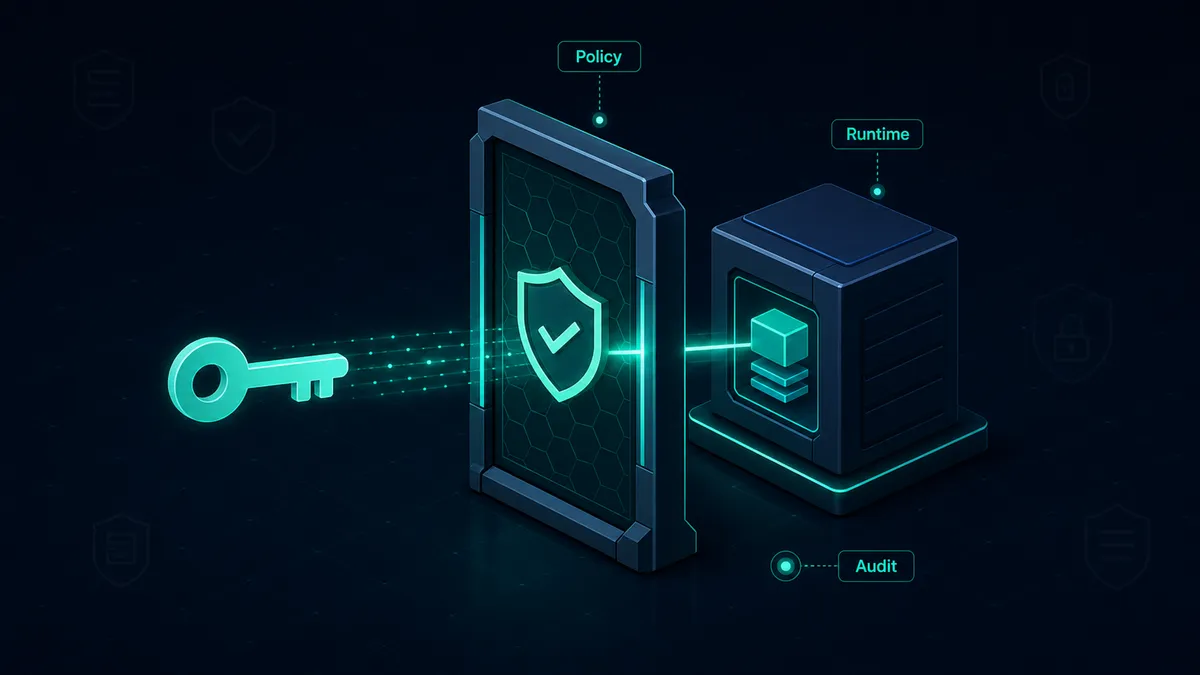
Zero trust changes agent runtime design by removing implicit trust between agents, tools, services, and networks. Each request should be authenticated, authorized, encrypted where appropriate, and logged. For AI agents, this matters because agents may act autonomously and call tools with real business impact. A zero-trust runtime should give each agent a workload identity, enforce policy at service and tool boundaries, and make activity auditable. Diagrid Catalyst is positioned around this model with cryptographic identity, mTLS, policy controls, and secure communication for agents and MCP servers.
Was this article helpful?
Your feedback helps improve Diagrid's FAQ experience.
Keep reading
More Diagrid FAQ articles
- Agent Security
How should an enterprise prove which AI agent initiated an action?
An enterprise should prove which AI agent initiated an action by assigning the agent a verifiable workload identity and recording the execution path.
- Agent Security
Why is workload identity different from a user account for an agent?
Workload identity identifies software, services, agents, or tools, while a user account identifies a person.
- Agent Security
Where is cryptographic identity useful in agent-to-tool calls?
Cryptographic identity is useful when an agent must prove its identity to a tool or service before access is granted.
