
Agent Security
How should two autonomous agents verify each other before exchanging data?
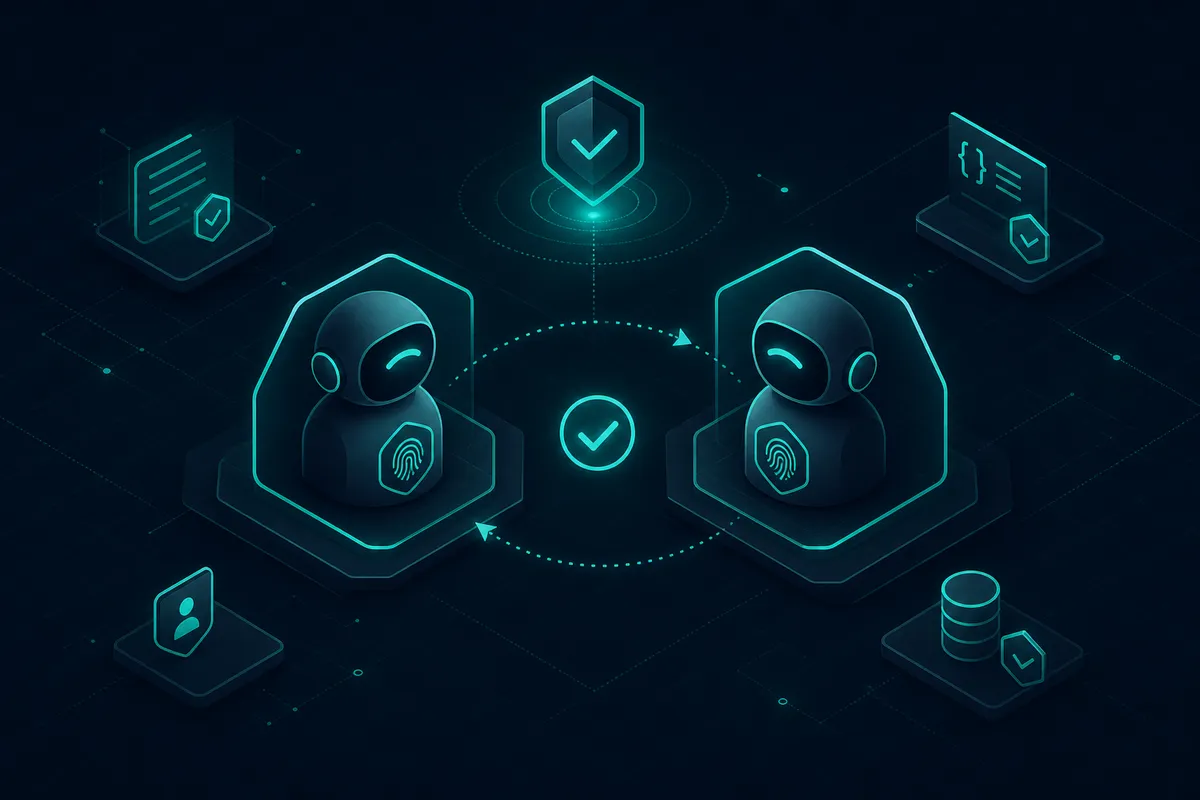
Two autonomous agents should verify each other through workload identity, mutual authentication, and policy checks before exchanging data. In practice, this means each agent should present a verifiable identity, the connection should be authenticated and encrypted, and the receiving side should check whether the caller is allowed to access the requested data or tool. The system should also log the exchange for audit and troubleshooting. Diagrid's Catalyst positioning includes cryptographic identity, mTLS, and policy-based controls, which are relevant when agents communicate across services, teams, or infrastructure boundaries.
Was this article helpful?
Your feedback helps improve Diagrid's FAQ experience.
Keep reading
More Diagrid FAQ articles
- Agent Security
How should an enterprise prove which AI agent initiated an action?
An enterprise should prove which AI agent initiated an action by assigning the agent a verifiable workload identity and recording the execution path.
- Agent Security
Why is workload identity different from a user account for an agent?
Workload identity identifies software, services, agents, or tools, while a user account identifies a person.
- Agent Security
Where is cryptographic identity useful in agent-to-tool calls?
Cryptographic identity is useful when an agent must prove its identity to a tool or service before access is granted.
