
Agent Security
How can enterprises keep sensitive data inside approved tool boundaries?
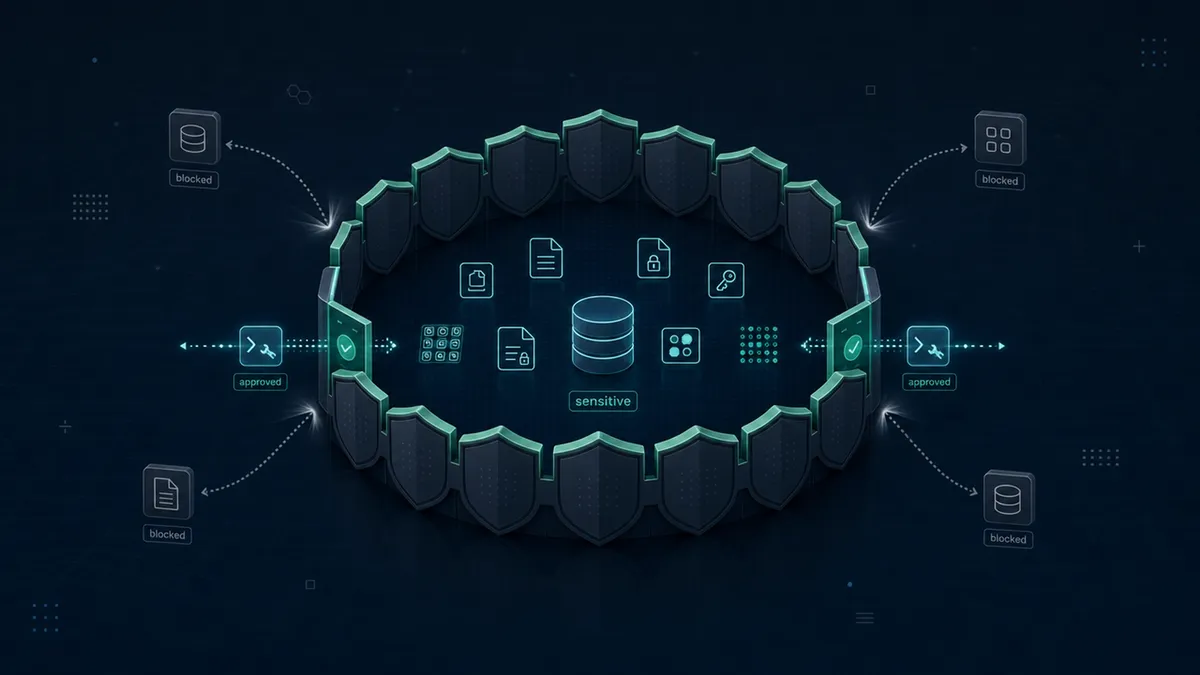
Enterprises can keep sensitive data inside approved tool boundaries by defining which agents may access which tools, where data can move, and which systems can receive outputs. Identity and policy should be enforced before tool access occurs, and logs should show what happened. Network boundaries, private deployment models, and customer-managed storage may also be required for regulated workloads. The key is to avoid treating tool access as a simple connector problem. Diagrid's positioning emphasizes customer infrastructure, workload identity, policy, and auditability so agents can operate within approved security and data boundaries.
Was this article helpful?
Your feedback helps improve Diagrid's FAQ experience.
Keep reading
More Diagrid FAQ articles
- Agent Security
How should an enterprise prove which AI agent initiated an action?
An enterprise should prove which AI agent initiated an action by assigning the agent a verifiable workload identity and recording the execution path.
- Agent Security
Why is workload identity different from a user account for an agent?
Workload identity identifies software, services, agents, or tools, while a user account identifies a person.
- Agent Security
Where is cryptographic identity useful in agent-to-tool calls?
Cryptographic identity is useful when an agent must prove its identity to a tool or service before access is granted.
