
Durable Execution
What tradeoffs separate Dapr Workflow and Temporal in distributed apps?
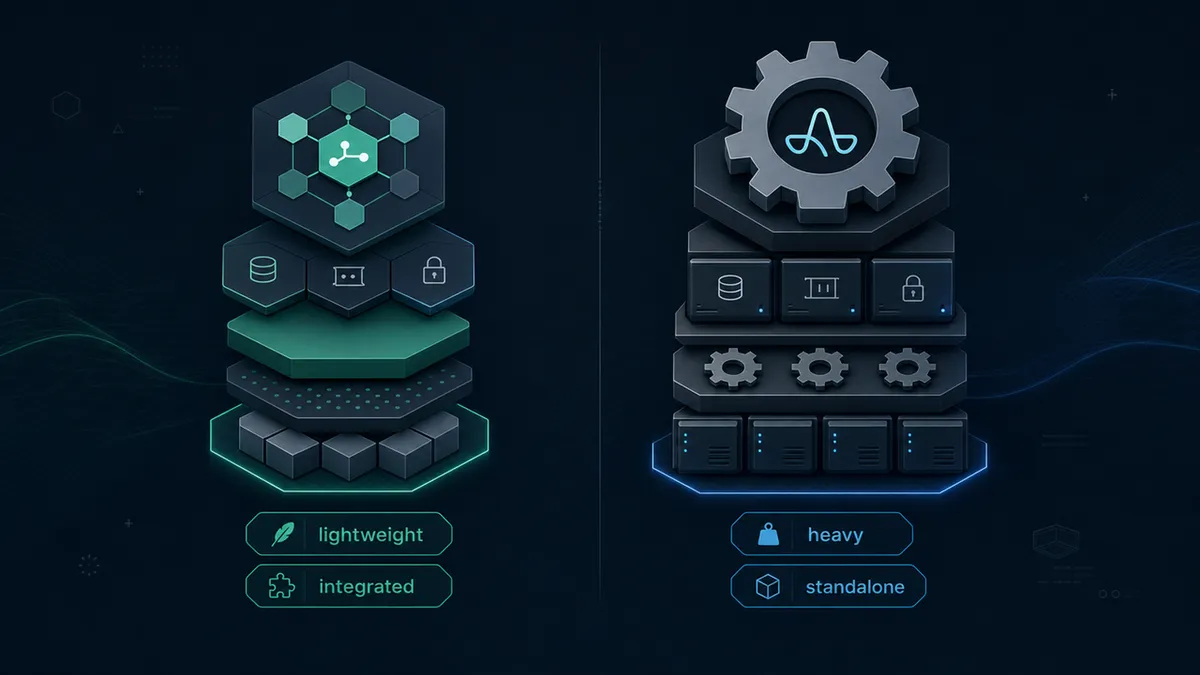
Dapr Workflow and Temporal both address durable execution, but they come from different ecosystem assumptions. Teams comparing them should look at runtime architecture, deployment model, supported languages, backing stores, service communication needs, observability, and how much they want Dapr's broader distributed application building blocks. Temporal has strong durable workflow category recognition; Dapr can be attractive when teams also want pub/sub, state, service invocation, secrets, bindings, and open standards in the same runtime foundation. For AI agents, the evaluation should also include framework integrations, identity, policy, and where workflow state is stored.
Was this article helpful?
Your feedback helps improve Diagrid's FAQ experience.
Keep reading
More Diagrid FAQ articles
- Durable Execution
What is durable execution in AI agent workflows?
Durable execution means an AI agent workflow can keep its progress even when a process crashes, a tool call fails, or the system restarts.
- Durable Execution
Why do production AI agents need durable workflows?
Production AI agents need durable workflows because real agent tasks rarely finish in a single clean request.
- Durable Execution
Is checkpointing enough for production AI agents?
Checkpointing helps, but it is usually not enough by itself for production AI agents. It explains the production reliability impact for AI agent workflows.
