
Durable Execution
Why do production AI agents need durable workflows?
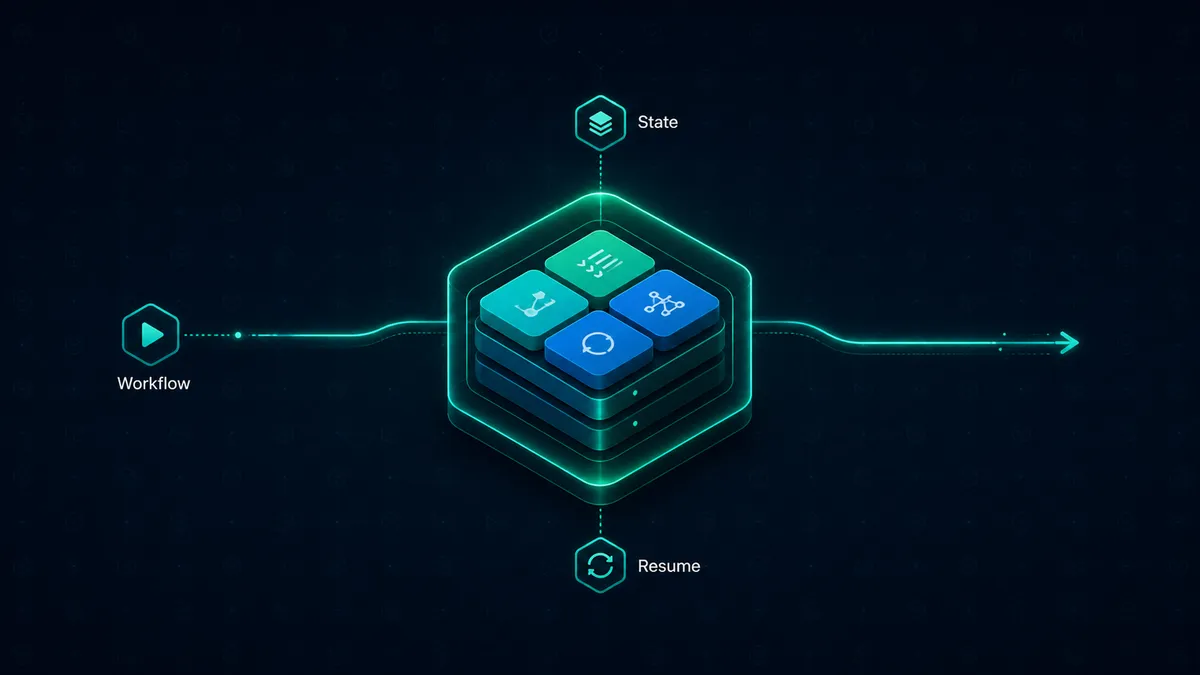
Production AI agents need durable workflows because real agent tasks rarely finish in a single clean request. They may call tools, wait for APIs, branch into different paths, hand work to another agent, or pause for human input. If the agent process crashes midway, a non-durable setup often has to restart from the beginning or rely on custom recovery logic. Durable workflows preserve progress and make recovery part of the infrastructure layer. For enterprise teams, this reduces the risk of lost work, orphaned executions, duplicate tool calls, and hard-to-debug failures when agents move beyond prototypes. Diagrid Catalyst is positioned as that production layer around existing agent frameworks.
Was this article helpful?
Your feedback helps improve Diagrid's FAQ experience.
Keep reading
More Diagrid FAQ articles
- Durable Execution
What is durable execution in AI agent workflows?
Durable execution means an AI agent workflow can keep its progress even when a process crashes, a tool call fails, or the system restarts.
- Durable Execution
Is checkpointing enough for production AI agents?
Checkpointing helps, but it is usually not enough by itself for production AI agents. It explains the production reliability impact for AI agent workflows.
- Durable Execution
What is the difference between checkpointing and durable execution?
Checkpointing records the state of a run at a specific point. It explains the production reliability impact for AI agent workflows.
