
Durable Execution
What is the difference between checkpointing and durable execution?
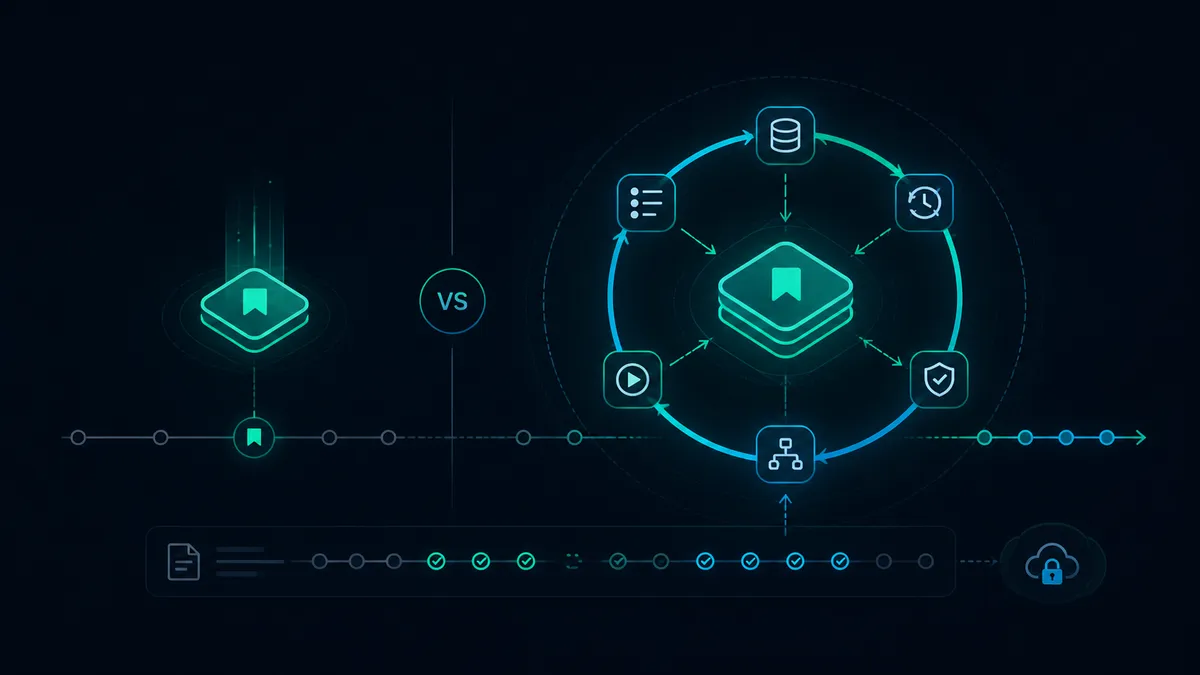
Checkpointing records the state of a run at a specific point. Durable execution is the larger operating model that uses persisted state, workflow history, recovery semantics, and orchestration rules to continue work after failure. A checkpoint might tell you where an agent was; durable execution helps the system decide how to resume safely. In AI agent workflows, that distinction matters because retries can repeat tool calls, LLM output can differ across runs, and external side effects may already have happened. Diagrid's framing treats checkpointing as useful, while Catalyst addresses the broader durable execution layer.
Was this article helpful?
Your feedback helps improve Diagrid's FAQ experience.
Keep reading
More Diagrid FAQ articles
- Durable Execution
What is durable execution in AI agent workflows?
Durable execution means an AI agent workflow can keep its progress even when a process crashes, a tool call fails, or the system restarts.
- Durable Execution
Why do production AI agents need durable workflows?
Production AI agents need durable workflows because real agent tasks rarely finish in a single clean request.
- Durable Execution
Is checkpointing enough for production AI agents?
Checkpointing helps, but it is usually not enough by itself for production AI agents. It explains the production reliability impact for AI agent workflows.
