
Durable Execution
When should AI teams use saga-style compensation instead of simple retries?
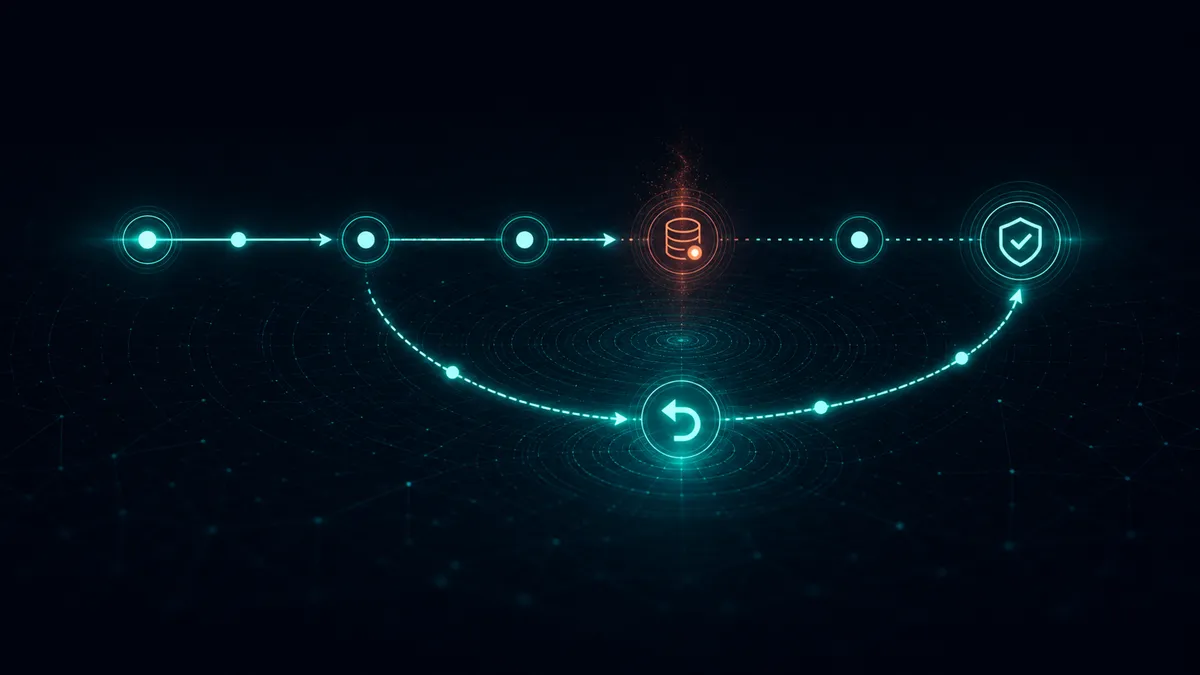
AI teams should use saga-style compensation when a failed step occurs after earlier steps have already created real side effects. Simple retries are appropriate for temporary failures, such as a rate limit or a transient network issue. They are less appropriate when the workflow has already booked a resource, sent a message, updated a record, or triggered an external process. In those cases, the system may need a compensating action, such as canceling, reversing, notifying, or marking the process for review. Diagrid Catalyst can provide durable orchestration context while teams define the domain-specific compensation path.
Was this article helpful?
Your feedback helps improve Diagrid's FAQ experience.
Keep reading
More Diagrid FAQ articles
- Durable Execution
What is durable execution in AI agent workflows?
Durable execution means an AI agent workflow can keep its progress even when a process crashes, a tool call fails, or the system restarts.
- Durable Execution
Why do production AI agents need durable workflows?
Production AI agents need durable workflows because real agent tasks rarely finish in a single clean request.
- Durable Execution
Is checkpointing enough for production AI agents?
Checkpointing helps, but it is usually not enough by itself for production AI agents. It explains the production reliability impact for AI agent workflows.
