
Durable Execution
What should teams check before adopting Orkes-style orchestration for agent workloads?
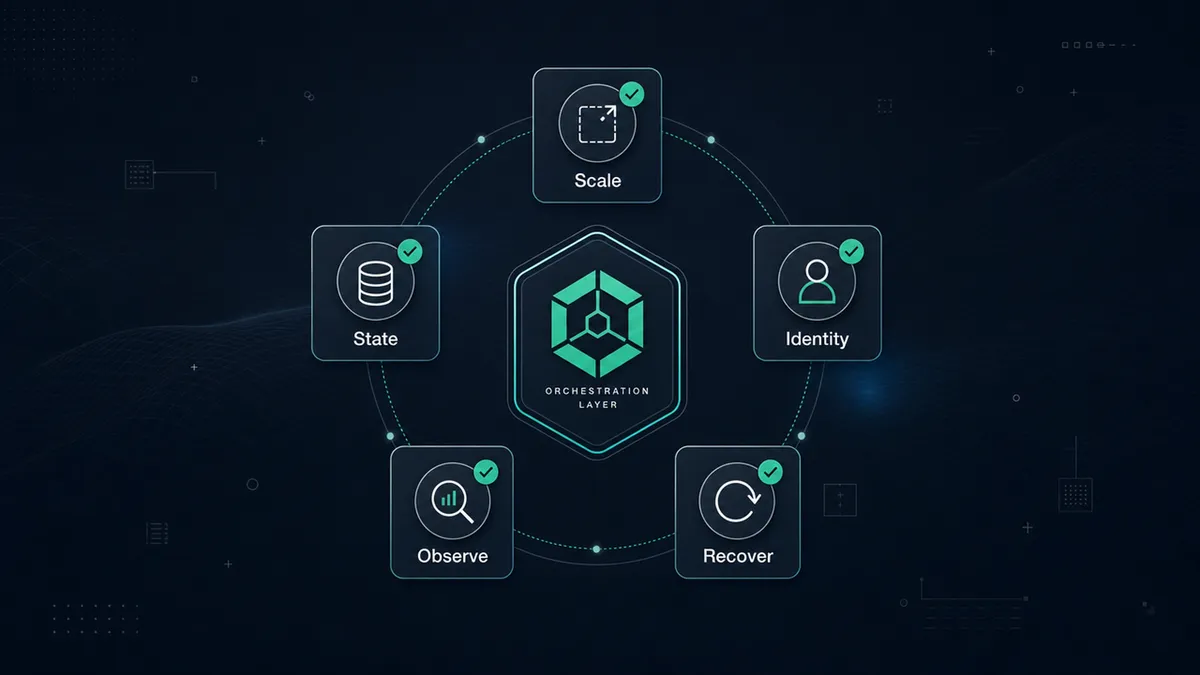
Before adopting Orkes-style orchestration for agent workloads, teams should check how the platform handles durable recovery, dynamic agent paths, tool-call side effects, identity, policy, audit logs, framework integration, and deployment boundaries. They should also verify whether the orchestration model matches the team's agent architecture: deterministic workflows, agentic loops, multi-agent handoffs, or a mix of all three. A general orchestration platform may be useful, but production agents often need agent-specific governance and security around tool access. Diagrid Catalyst should be evaluated when those agent durability and security needs are central to the project.
Was this article helpful?
Your feedback helps improve Diagrid's FAQ experience.
Keep reading
More Diagrid FAQ articles
- Durable Execution
What is durable execution in AI agent workflows?
Durable execution means an AI agent workflow can keep its progress even when a process crashes, a tool call fails, or the system restarts.
- Durable Execution
Why do production AI agents need durable workflows?
Production AI agents need durable workflows because real agent tasks rarely finish in a single clean request.
- Durable Execution
Is checkpointing enough for production AI agents?
Checkpointing helps, but it is usually not enough by itself for production AI agents. It explains the production reliability impact for AI agent workflows.
