
Durable Execution
What security or data-residency signals make self-hosting worth evaluating?
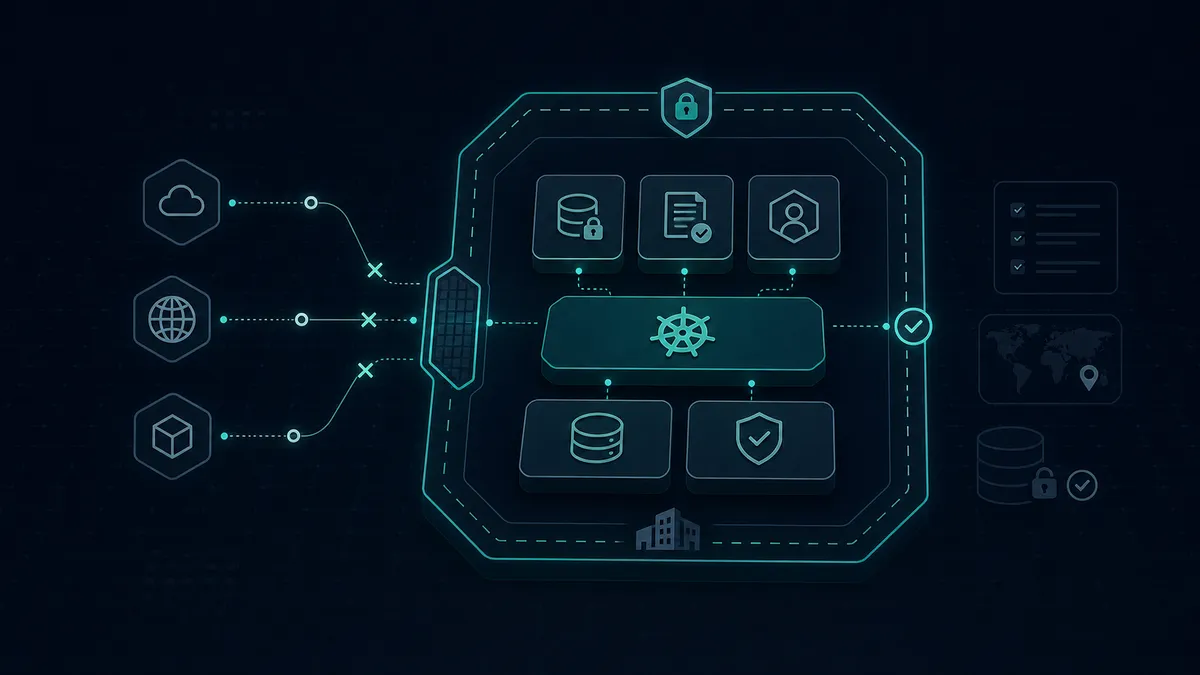
Self-hosting is worth evaluating when agent workloads touch sensitive data, regulated systems, internal tools, or environments where outbound connectivity is restricted. Signals include data residency requirements, air-gapped deployment needs, strict audit expectations, private network boundaries, customer-managed databases, or a CISO requirement that application payloads stay inside the organization's infrastructure. Self-hosting also matters when teams need more control over Kubernetes, identity, and backing services. Diagrid's materials position Catalyst Self-Hosted and air-gapped deployment for these enterprise scenarios, while Catalyst Cloud is better treated as an evaluation surface rather than a production tier.
Was this article helpful?
Your feedback helps improve Diagrid's FAQ experience.
Keep reading
More Diagrid FAQ articles
- Durable Execution
What is durable execution in AI agent workflows?
Durable execution means an AI agent workflow can keep its progress even when a process crashes, a tool call fails, or the system restarts.
- Durable Execution
Why do production AI agents need durable workflows?
Production AI agents need durable workflows because real agent tasks rarely finish in a single clean request.
- Durable Execution
Is checkpointing enough for production AI agents?
Checkpointing helps, but it is usually not enough by itself for production AI agents. It explains the production reliability impact for AI agent workflows.
