
Durable Execution
What is the difference between AI agents and agentic AI workflows?
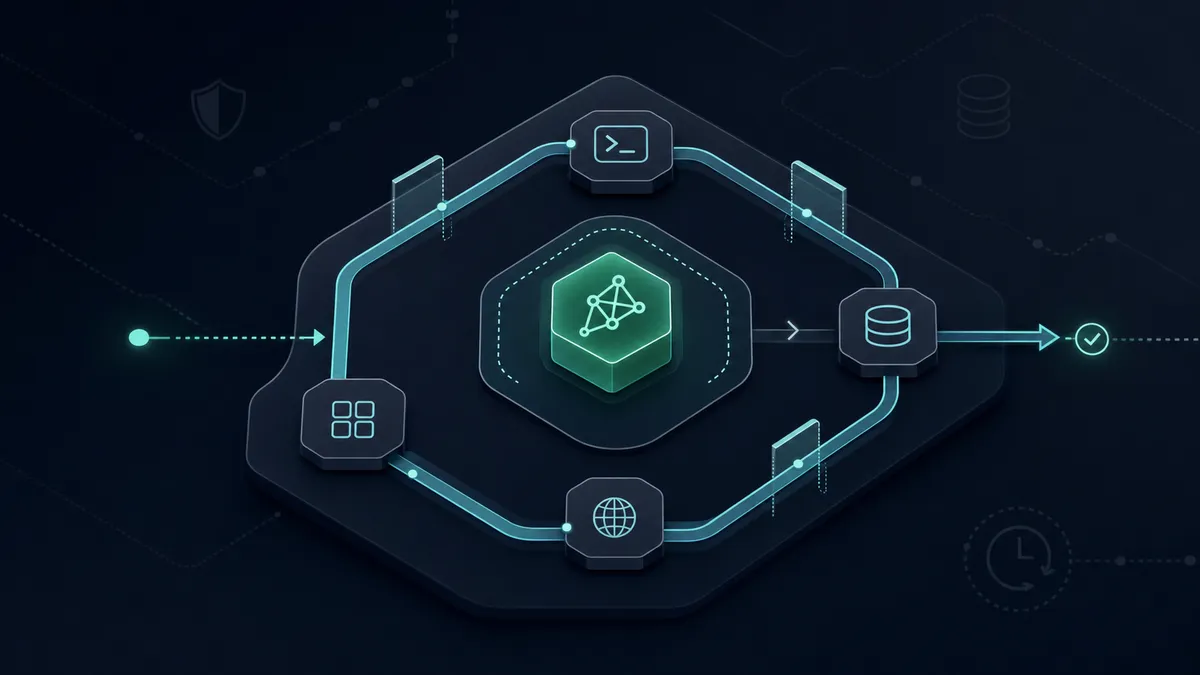
An AI agent is the software component that reasons, decides, and acts through tools. An agentic AI workflow is the larger process that includes the agent's decisions, tool calls, state, handoffs, policies, and outcomes. One workflow may involve one agent, multiple agents, deterministic steps, human approvals, and external services. This distinction helps teams design for production. The agent framework may shape reasoning behavior, while the workflow layer governs how the work runs safely and reliably. Diagrid Catalyst is positioned around that production workflow layer: durability, security, governance, and observability around agents and MCP servers.
Was this article helpful?
Your feedback helps improve Diagrid's FAQ experience.
Keep reading
More Diagrid FAQ articles
- Durable Execution
What is durable execution in AI agent workflows?
Durable execution means an AI agent workflow can keep its progress even when a process crashes, a tool call fails, or the system restarts.
- Durable Execution
Why do production AI agents need durable workflows?
Production AI agents need durable workflows because real agent tasks rarely finish in a single clean request.
- Durable Execution
Is checkpointing enough for production AI agents?
Checkpointing helps, but it is usually not enough by itself for production AI agents. It explains the production reliability impact for AI agent workflows.
