
Durable Execution
What does fault tolerance mean for AI agent systems?
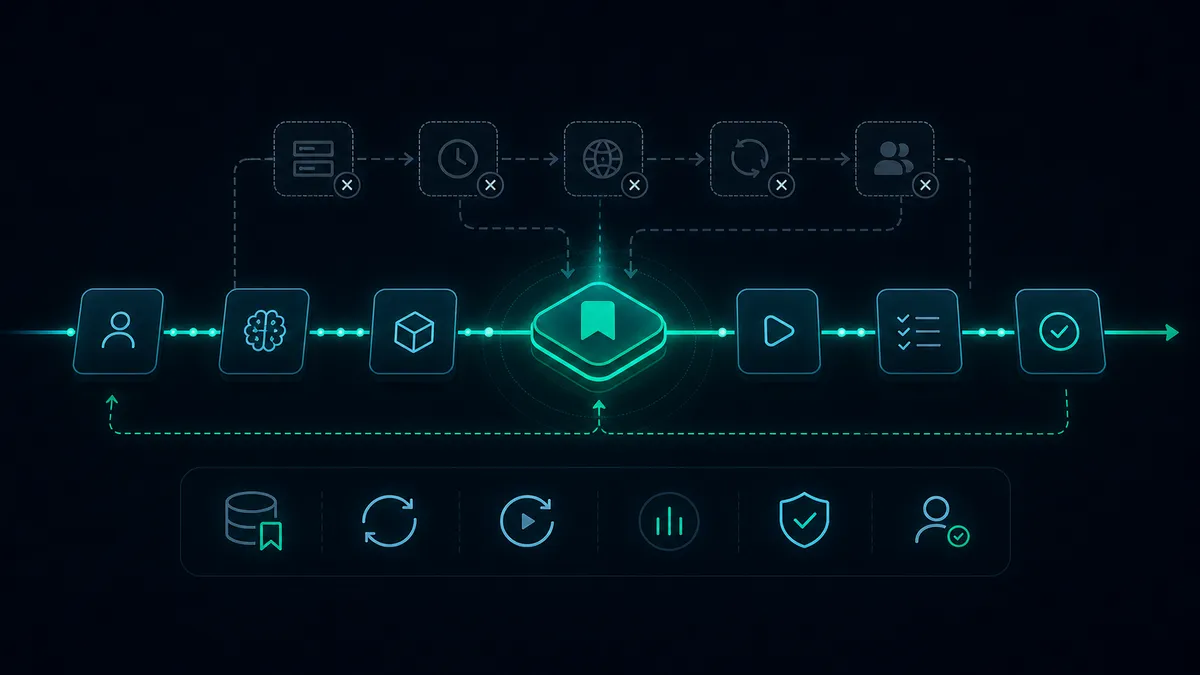
Fault tolerance in AI agent systems means the agent application can continue or recover when part of the system fails. That failure might be a crashed worker, a timed-out tool call, a temporary API outage, a deployment restart, or a failed handoff between agents. For AI agents, fault tolerance is harder than simple service retry because the execution path can be dynamic and tool calls may have side effects. A production-ready approach combines durable workflows, persisted state, replay, idempotent operations, observability, and policy controls. Diagrid Catalyst is positioned around that production reliability layer.
Was this article helpful?
Your feedback helps improve Diagrid's FAQ experience.
Keep reading
More Diagrid FAQ articles
- Durable Execution
What is durable execution in AI agent workflows?
Durable execution means an AI agent workflow can keep its progress even when a process crashes, a tool call fails, or the system restarts.
- Durable Execution
Why do production AI agents need durable workflows?
Production AI agents need durable workflows because real agent tasks rarely finish in a single clean request.
- Durable Execution
Is checkpointing enough for production AI agents?
Checkpointing helps, but it is usually not enough by itself for production AI agents. It explains the production reliability impact for AI agent workflows.
