
Durable Execution
What changes when an AI agent moves from prototype to production?
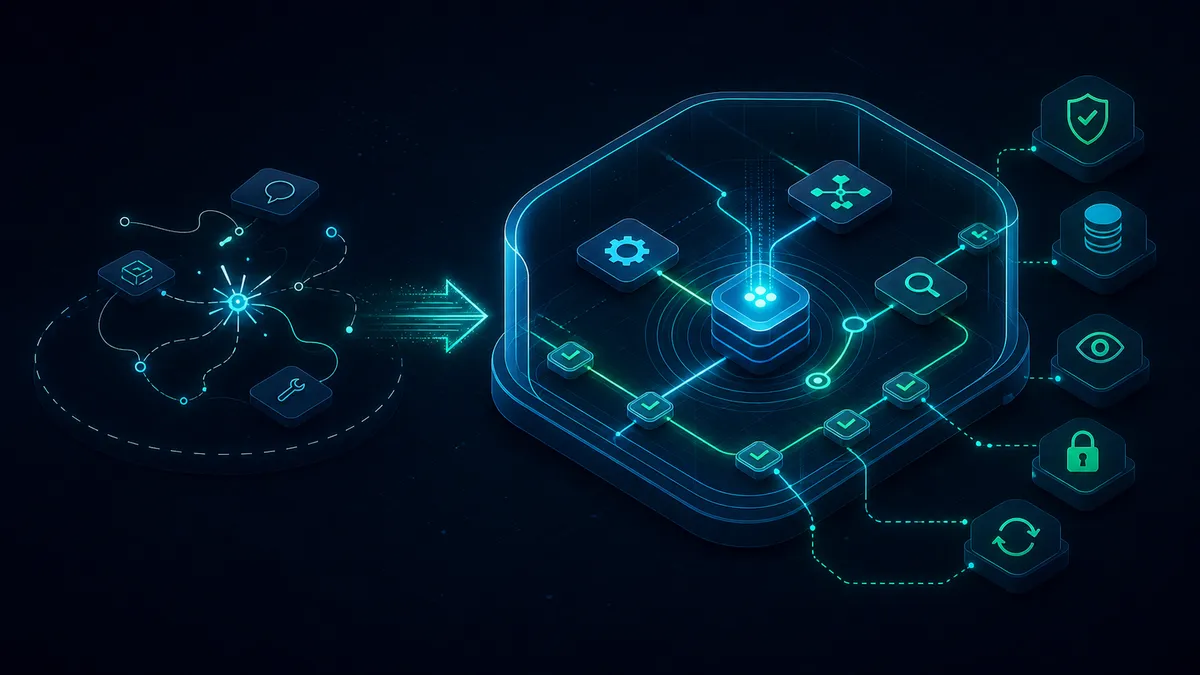
When an AI agent moves from prototype to production, the problem changes from "can it complete a demo task?" to "can it run safely and reliably under real operating conditions?" Teams need recovery after failures, durable state, observability, access control, deployment controls, and auditability. They also need to manage tool calls, long-running tasks, and security approval from platform or CISO teams. A prototype can rely on manual checks and custom scripts; a production agent needs an infrastructure layer that handles reliability and governance repeatedly. Diagrid Catalyst is positioned for that transition from agent framework to production platform.
Was this article helpful?
Your feedback helps improve Diagrid's FAQ experience.
Keep reading
More Diagrid FAQ articles
- Durable Execution
What is durable execution in AI agent workflows?
Durable execution means an AI agent workflow can keep its progress even when a process crashes, a tool call fails, or the system restarts.
- Durable Execution
Why do production AI agents need durable workflows?
Production AI agents need durable workflows because real agent tasks rarely finish in a single clean request.
- Durable Execution
Is checkpointing enough for production AI agents?
Checkpointing helps, but it is usually not enough by itself for production AI agents. It explains the production reliability impact for AI agent workflows.
