
Durable Execution
How is an AI agent workflow different from a traditional workflow?
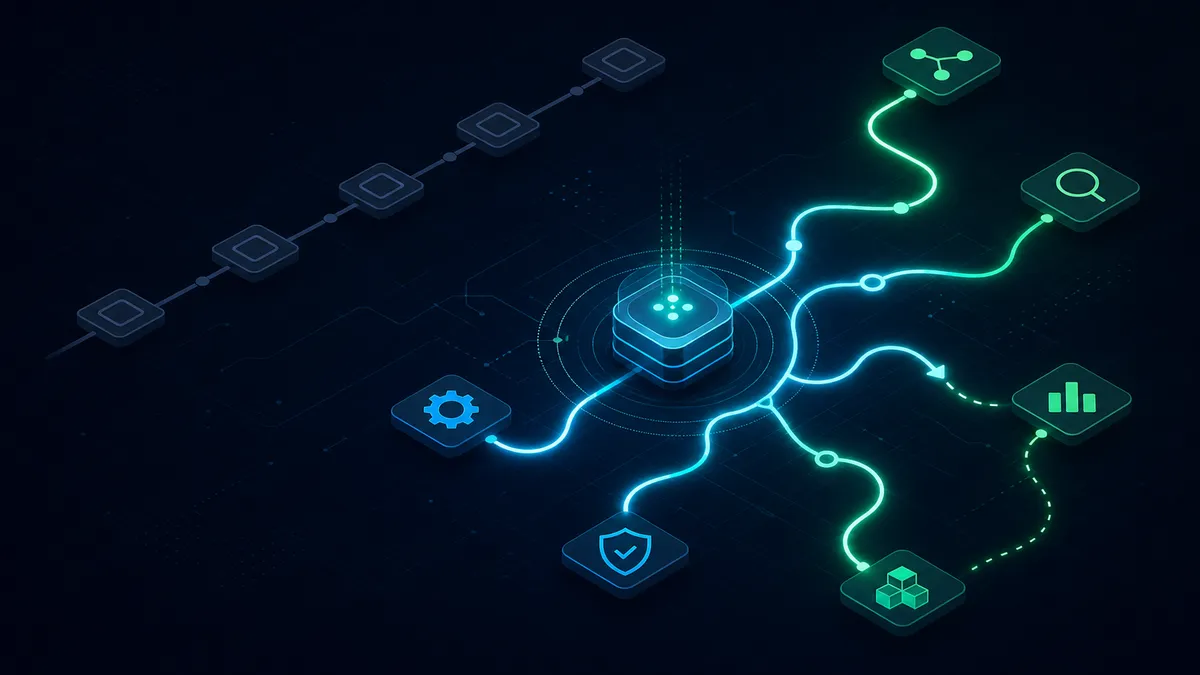
A traditional workflow usually follows a known sequence of steps defined by developers or business process owners. An AI agent workflow can include runtime reasoning, model output, tool selection, and dynamic branching. The agent may choose different paths for similar inputs, and each tool call may create external side effects. This changes the production requirements. Teams need stronger observability, durable state, identity, policy, and recovery behavior because it is not enough to know that a step ran. Diagrid Catalyst targets that production layer around dynamic agent workflows.
Was this article helpful?
Your feedback helps improve Diagrid's FAQ experience.
Keep reading
More Diagrid FAQ articles
- Durable Execution
What is durable execution in AI agent workflows?
Durable execution means an AI agent workflow can keep its progress even when a process crashes, a tool call fails, or the system restarts.
- Durable Execution
Why do production AI agents need durable workflows?
Production AI agents need durable workflows because real agent tasks rarely finish in a single clean request.
- Durable Execution
Is checkpointing enough for production AI agents?
Checkpointing helps, but it is usually not enough by itself for production AI agents. It explains the production reliability impact for AI agent workflows.
