
Durable Execution
How can Pydantic AI applications handle long-running, tool-calling tasks?
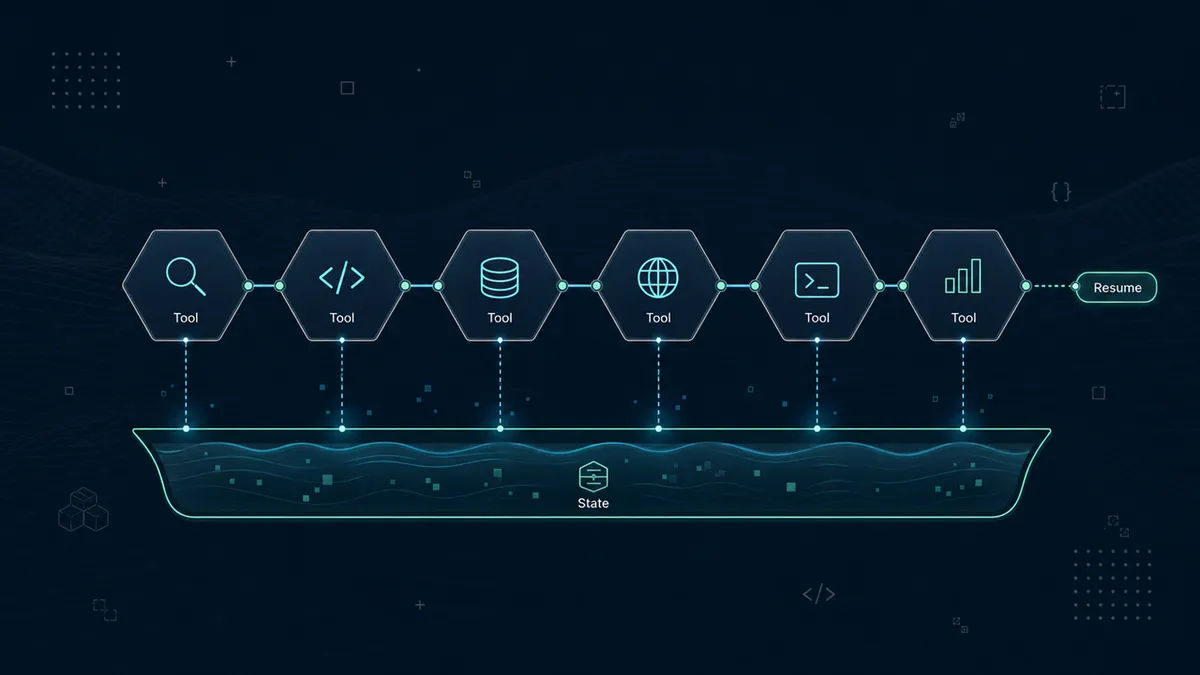
Pydantic AI applications can handle long-running, tool-calling tasks more safely when the agent logic is wrapped in a durable workflow. The application should persist important state, track completed tool calls, define retry and idempotency behavior, and expose traces for debugging. Type safety helps structure inputs and outputs, but it does not by itself solve crash recovery, operational visibility, or governance. For production use, teams should pair framework-level development with infrastructure for durable execution and policy. Diagrid Catalyst is positioned as a way to add those controls while keeping the agent application's existing framework.
Was this article helpful?
Your feedback helps improve Diagrid's FAQ experience.
Keep reading
More Diagrid FAQ articles
- Durable Execution
What is durable execution in AI agent workflows?
Durable execution means an AI agent workflow can keep its progress even when a process crashes, a tool call fails, or the system restarts.
- Durable Execution
Why do production AI agents need durable workflows?
Production AI agents need durable workflows because real agent tasks rarely finish in a single clean request.
- Durable Execution
Is checkpointing enough for production AI agents?
Checkpointing helps, but it is usually not enough by itself for production AI agents. It explains the production reliability impact for AI agent workflows.
