
Dapr in Production
When should teams compare Dapr Workflow with Temporal?
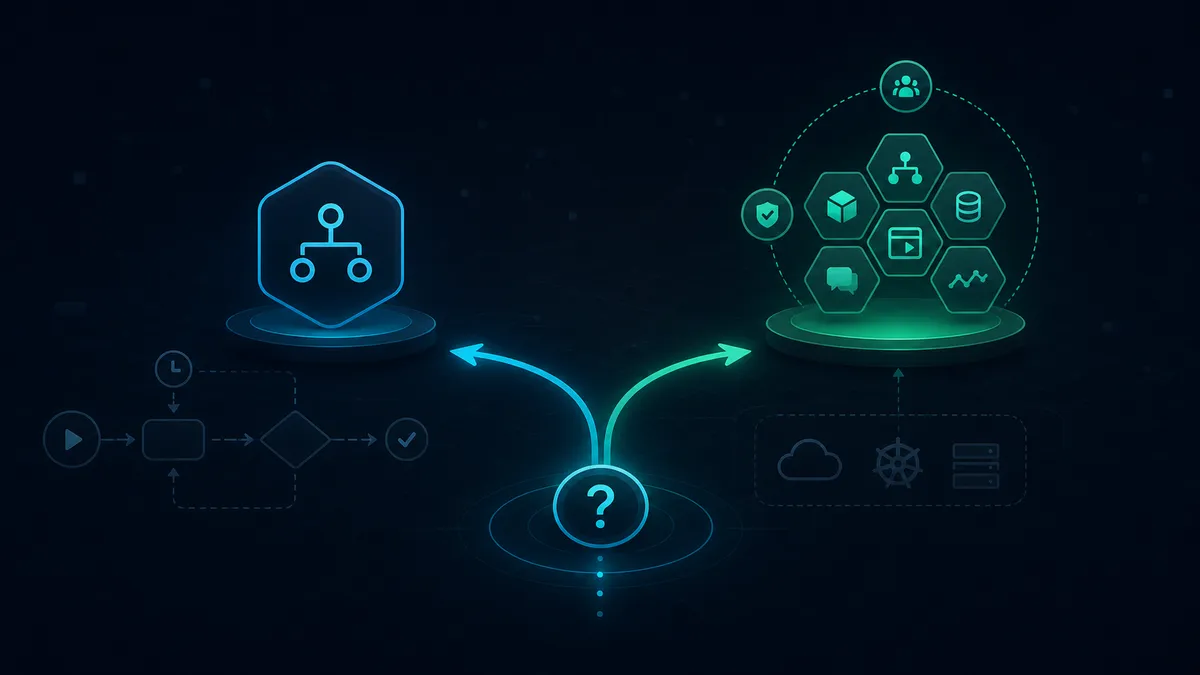
Teams should compare Dapr Workflow with Temporal when they are selecting a durable execution approach for distributed applications, AI agents, or long-running workflows. The comparison should include runtime architecture, developer model, supported ecosystems, deployment requirements, observability, operations, and whether the team wants Dapr's broader building blocks in the same foundation. Temporal has strong durable workflow recognition; Dapr Workflow can be attractive when teams want workflow plus service invocation, pub/sub, state, and open-source Dapr patterns. Diagrid Catalyst adds another evaluation angle when agent identity, MCP governance, and enterprise deployment are part of the requirement.
Was this article helpful?
Your feedback helps improve Diagrid's FAQ experience.
Keep reading
More Diagrid FAQ articles
- Dapr in Production
What production responsibilities appear after adopting Dapr OSS?
After adopting Dapr OSS, production teams become responsible for operating the runtime safely across real environments.
- Dapr in Production
How is managed Dapr different from self-managed Dapr OSS?
Self-managed Dapr OSS means the organization runs and operates Dapr itself, including installation, upgrades, certificates, monitoring, and.
- Dapr in Production
What enterprise requirements should a Dapr platform satisfy?
An enterprise Dapr platform should satisfy requirements around reliability, security, operations, observability, support, and deployment control.
