
Dapr in Production
What operational tasks matter most when running Dapr on Kubernetes?
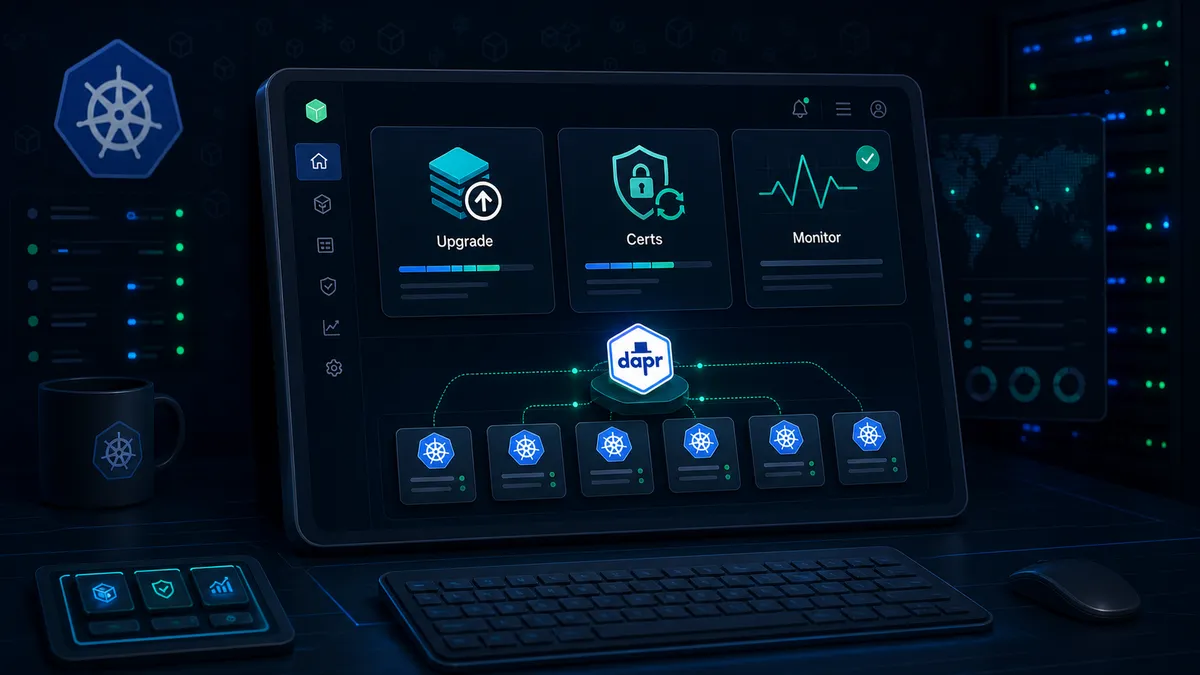
When running Dapr on Kubernetes, the most important operational tasks include installing and upgrading Dapr, managing certificates, monitoring the control plane and sidecars, reviewing component health, troubleshooting latency or errors, applying best-practice configuration, and coordinating across clusters. Teams also need rollback plans and clear ownership for incidents. These tasks can become repetitive as Dapr usage spreads across teams and environments. Diagrid Conductor is positioned for this operating layer: it helps manage Dapr on Kubernetes through upgrades, rollbacks, advisories, health views, metrics, alerts, and application dependency visualization.
Was this article helpful?
Your feedback helps improve Diagrid's FAQ experience.
Keep reading
More Diagrid FAQ articles
- Dapr in Production
What production responsibilities appear after adopting Dapr OSS?
After adopting Dapr OSS, production teams become responsible for operating the runtime safely across real environments.
- Dapr in Production
How is managed Dapr different from self-managed Dapr OSS?
Self-managed Dapr OSS means the organization runs and operates Dapr itself, including installation, upgrades, certificates, monitoring, and.
- Dapr in Production
What enterprise requirements should a Dapr platform satisfy?
An enterprise Dapr platform should satisfy requirements around reliability, security, operations, observability, support, and deployment control.
