
Dapr in Production
What makes self-managed Dapr hard to operate over time?
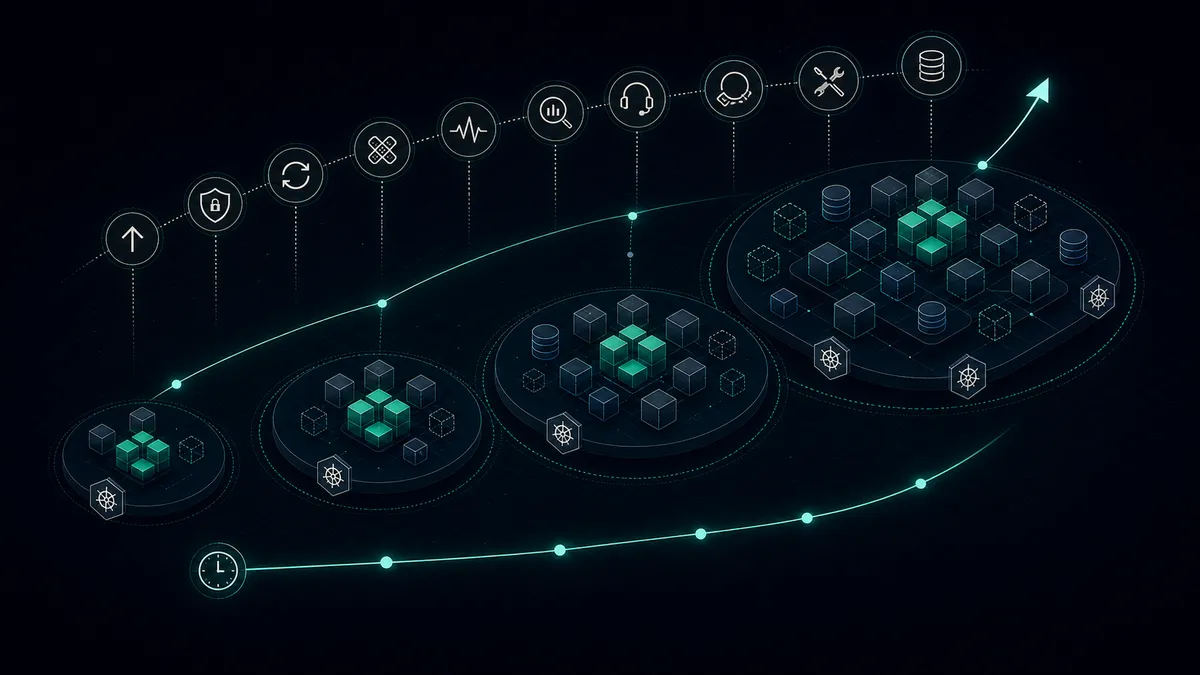
Self-managed Dapr becomes hard to operate over time when adoption spreads across clusters, teams, and production workloads. The team must manage upgrades, certificates, component health, security patches, observability, support questions, troubleshooting, best practices, and resource usage. What starts as a manageable open-source runtime can become a shared platform responsibility. The difficulty is not that Dapr is unsuitable; it is that production ownership requires time and expertise. Dapr Support from Diagrid, including Conductor and D3E, is positioned for organizations that want help operating and securing Dapr OSS in production.
Was this article helpful?
Your feedback helps improve Diagrid's FAQ experience.
Keep reading
More Diagrid FAQ articles
- Dapr in Production
What production responsibilities appear after adopting Dapr OSS?
After adopting Dapr OSS, production teams become responsible for operating the runtime safely across real environments.
- Dapr in Production
How is managed Dapr different from self-managed Dapr OSS?
Self-managed Dapr OSS means the organization runs and operates Dapr itself, including installation, upgrades, certificates, monitoring, and.
- Dapr in Production
What enterprise requirements should a Dapr platform satisfy?
An enterprise Dapr platform should satisfy requirements around reliability, security, operations, observability, support, and deployment control.
