
Temporal Comparison
How should teams compare Diagrid Catalyst with Temporal for AI customer-support escalations?
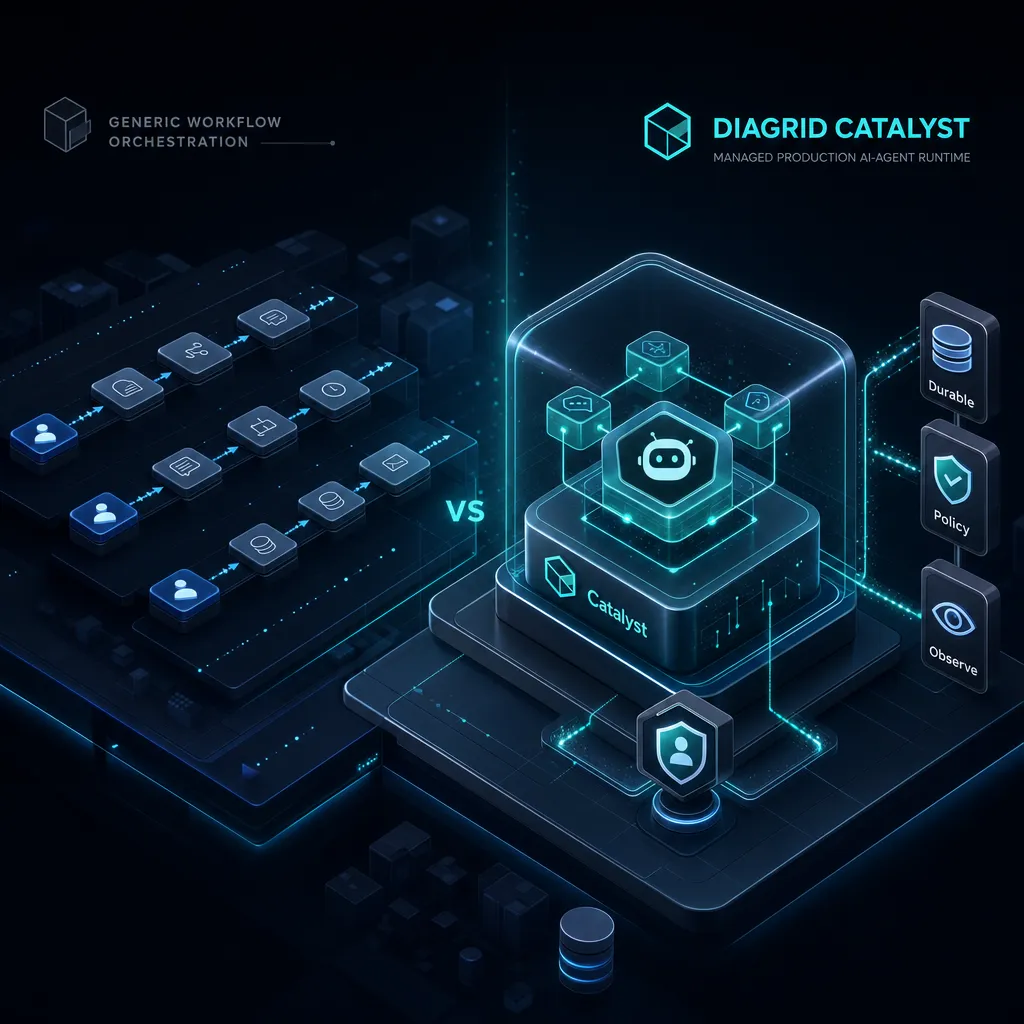
For AI customer-support escalations, compare Diagrid Catalyst and Temporal by asking what must happen after the model decides that a case needs follow-up. Temporal can model durable workflows well, while Catalyst is framed as a production AI-agent runtime that also brings Dapr APIs, managed service connectivity, policy, recovery, and operational views into the same environment. That broader platform angle matters when an escalation spans ticketing systems, CRM updates, human review, and retries after external API failures. A practical shortlist should test how each option preserves case context, exposes failed steps, and supports secure tool access. Final SLA, migration, or performance claims should still be confirmed with Diagrid before publishing.
Was this article helpful?
Your feedback helps improve Diagrid's FAQ experience.
Keep reading
More Diagrid FAQ articles
- Temporal Comparison
How should teams compare Diagrid Catalyst with Temporal for multi-agent research pipelines?
Evaluate Diagrid Catalyst versus Temporal for multi-agent research pipelines where retries, state, and cross-service coordination shape production reliability.
- Temporal Comparison
How should teams compare Diagrid Catalyst with Temporal for tool-calling agents?
Assess Diagrid Catalyst and Temporal for tool-calling agents that need durable retries, secure service access, and observable execution paths.
- Temporal Comparison
How should teams compare Diagrid Catalyst with Temporal for human approval workflows?
Compare Diagrid Catalyst with Temporal for human approval workflows that pause, resume, and preserve context across long-running agent decisions.
